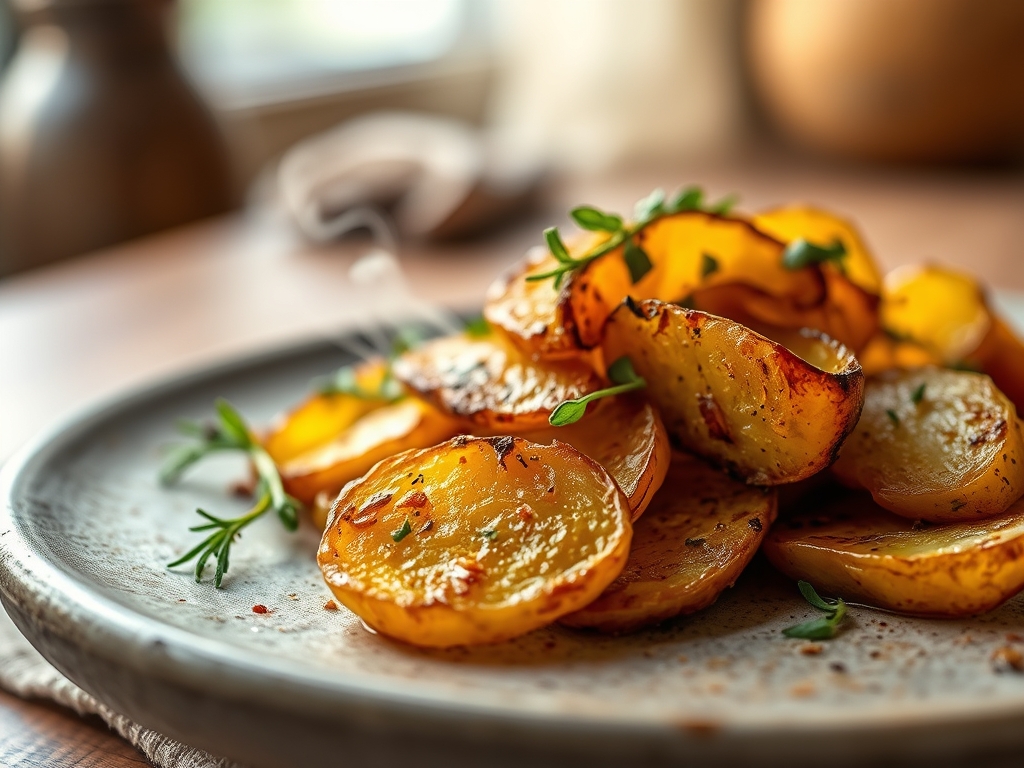
Close your eyes and listen for that specific, high-frequency shatter that only occurs when a fork meets a perfectly caramelized crust. We are not just making dinner; we are engineering the ultimate crunch. When you master golden potato recipes roasted to perfection, you are balancing the delicate dance between starch gelatinization and the Maillard reaction. Most home cooks settle for "soft," but we are aiming for a glass-like exterior that yields to a crumb as fluffy as a cloud. This transformation requires more than just high heat. It demands an understanding of surface area, pH levels, and lipid distribution. Grab your apron and your sharpest chef knife. We are about to turn a humble tuber into a culinary masterpiece that will make your kitchen smell like a high-end bistro.
The Gathers:
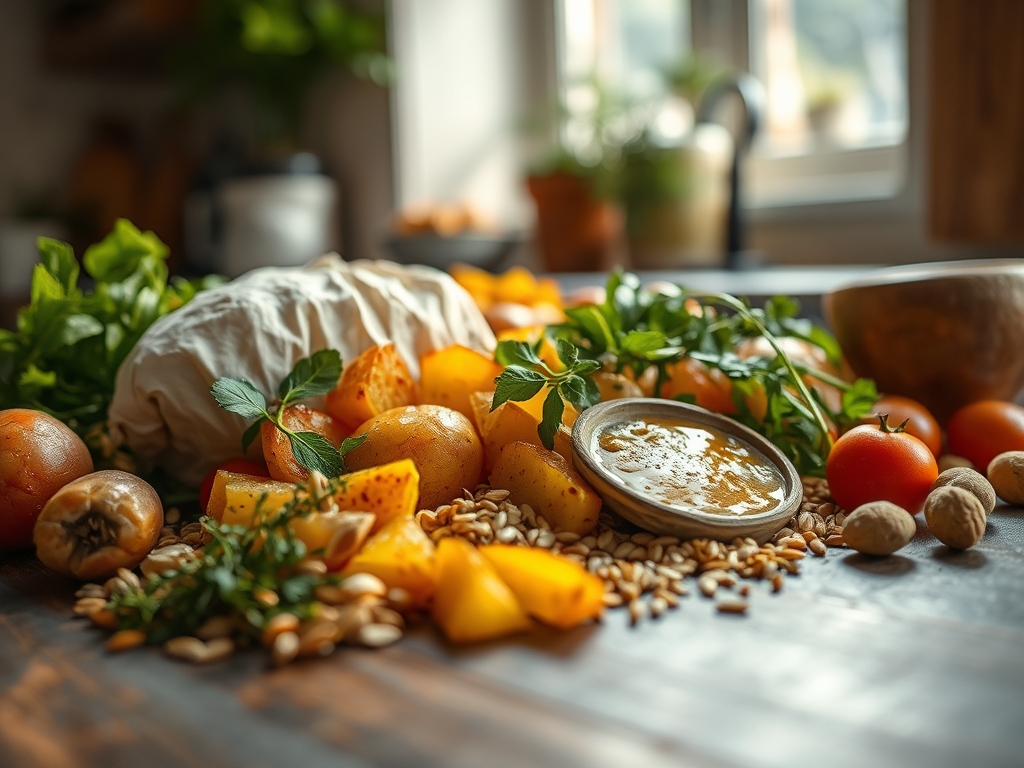
To achieve the gold standard, we must start with the right biological building blocks. Use a digital scale to ensure precision, as the ratio of fat to surface area is the difference between "greasy" and "crispy."
- The Tuber: 2 lbs of Yukon Gold potatoes. Their medium starch content provides a creamy interior while holding their structural integrity better than a starchy Russet.
- The Lipid: 1/4 cup of rendered duck fat or high-smoke-point avocado oil. Duck fat contains specific fatty acids that create a more viscous coating, leading to superior browning.
- The Catalyst: 1 teaspoon of baking soda. This is the secret weapon for texture.
- The Aromatics: 4 cloves of garlic (crushed), 2 sprigs of rosemary, and 1 teaspoon of flaky sea salt.
- The Acid: A splash of sherry vinegar to deglaze the palate after the first bite.
Smart Substitutions: If you are keeping it plant-based, swap the animal fat for a refined coconut oil. It mimics the saturated fat structure of lard without the coconut flavor. For a piquant kick, swap the rosemary for smoked paprika and a zest of lemon using a microplane for ultra-fine distribution.
The Clock
Efficiency in the kitchen is about "Chef's Flow," which is the art of overlapping tasks so no heat is wasted.
- Prep Time: 15 minutes. This involves the precision dicing and the initial parboil.
- Cook Time: 45 to 55 minutes. We are looking for deep amber hues, not just pale yellow.
- Total Time: Approximately 70 minutes.
The flow begins by preheating your oven with the heavy-bottomed skillet or baking sheet already inside. This ensures that the moment the potatoes hit the metal, the heat transfer is instantaneous, preventing the starch from sticking to the surface.
The Masterclass
1. The Precision Cut
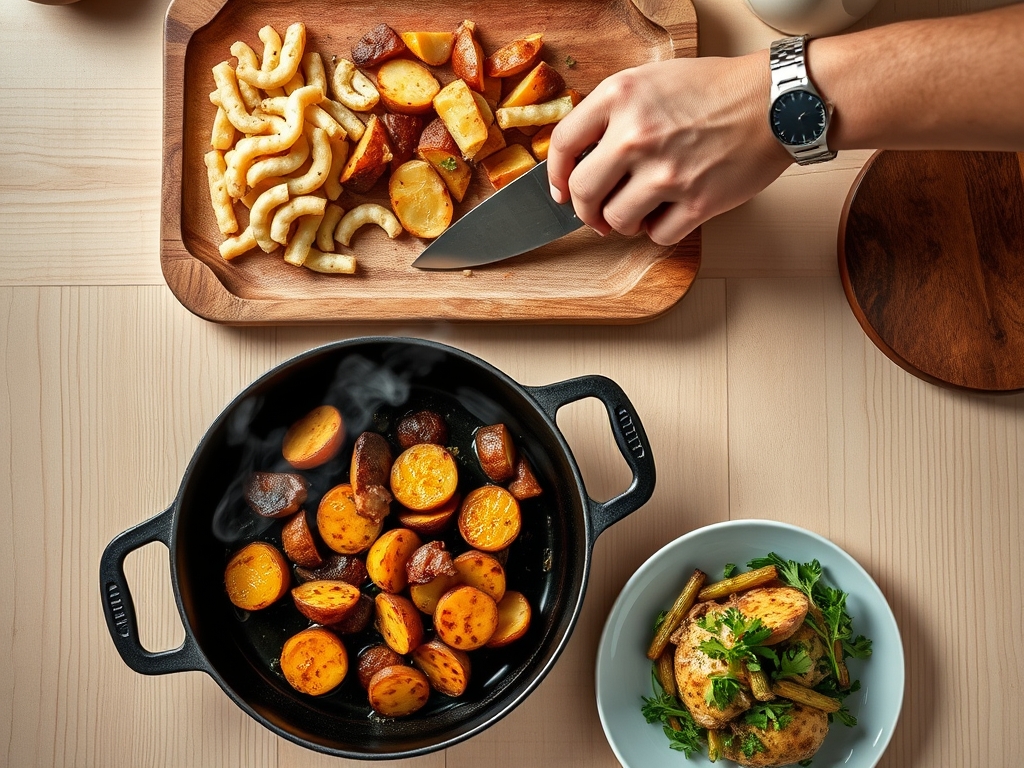
Use a sharp knife to cube your potatoes into uniform 1-inch pieces. Consistency is not just for aesthetics; it ensures that every piece reaches the same internal temperature at the same time.
Pro Tip: Uniformity prevents smaller pieces from carbonizing while larger ones remain raw. This is known as thermal equilibrium.
2. The Alkaline Parboil
Drop your cubes into a saucier of boiling water heavily seasoned with salt and that teaspoon of baking soda. Boil for about 8 to 10 minutes until the edges are frayed.
Pro Tip: Baking soda breaks down the potato's pectin. This creates a starchy "slurry" on the surface that, once roasted, dehydrates into the ultimate crunchy crust.
3. The Rough Up
Drain the potatoes and let them steam dry for two minutes. Use a bench scraper or simply shake them vigorously in the pot until the surfaces look fuzzy and mashed.
Pro Tip: Increasing the surface area through "fuzzing" provides more sites for the Maillard reaction to occur, multiplying the crunch factor.
4. The Lipid Infusion
While the potatoes are steaming, heat your fat in a small pan with the aromatics. This allows the oils to infuse with the rosemary and garlic without burning the solids.
Pro Tip: Fat acts as a heat conductor. By coating every "fuzzy" nook and cranny, you ensure the heat from the oven reaches deep into the potato's surface structure.
5. The Sizzle Strike
Carefully pull your hot baking sheet from the oven and pour the potatoes onto it. Use tongs to spread them out. You should hear an immediate, aggressive hiss.
Pro Tip: This prevents the potatoes from steaming. If the pan is cold, the potatoes will release moisture and become soggy rather than searing.
6. The First Flip
Roast at 425 degrees Fahrenheit for 20 minutes before touching them. Use a thin metal spatula to flip them, ensuring you don't tear the developing crust.
Pro Tip: Moving the potatoes too early disrupts the formation of the dehydrated starch layer, which is essential for that "shatter" texture.
7. The Aromatic Finish
In the last 5 minutes of roasting, toss in your reserved garlic and herbs. This prevents the delicate volatile oils in the herbs from dissipating under long-term heat.
Pro Tip: This late addition utilizes residual heat to toast the aromatics without turning them bitter or acrid.
8. The Salt Rain
Once they are deep golden brown, remove them from the oven and immediately sprinkle with flaky sea salt while the surface oil is still liquid.
Pro Tip: This allows the salt to adhere to the surface before the oil re-absorbs into the potato or cools into a solid state.
9. The Rest
Let the potatoes sit on the hot tray for three minutes before serving.
Pro Tip: This allows for thermal carryover, where the internal moisture redistributes slightly, ensuring the center is creamy while the outside stays rigid.
The Deep Dive
Macro Nutrition: One serving of these golden potato recipes roasted provides roughly 220 calories, 4g of fiber, and 3g of protein. Potatoes are surprisingly high in Vitamin C and potassium, making them an excellent recovery food for athletes.
Dietary Swaps:
- Keto: Swap potatoes for cauliflower florets. Reduce roasting time to 25 minutes.
- Vegan: Use extra virgin olive oil or avocado oil.
- GF: Naturally gluten-free, but ensure your baking soda is certified if you have extreme sensitivities.
The Fix-It:
- Soggy Potatoes: Usually caused by overcrowding. If the potatoes are too close, they steam each other. Spread them across two pans next time.
- Burnt Garlic: This happens when garlic is added at the start. Always add minced aromatics in the final minutes.
- Sticking to Pan: This means your pan wasn't hot enough when the potatoes were added. Always preheat your roasting surface.
Meal Prep: To reheat and maintain "day-one" quality, avoid the microwave. The microwave vibrates water molecules, which turns the crispy starch back into a limp, hydrated mess. Instead, use an air fryer or a dry skillet over medium heat to re-dehydrate the exterior.
The Wrap-Up
There is a genuine science to the perfect side dish, and you now hold the blueprint. By manipulating the pH of your boiling water and respecting the power of a preheated pan, you have elevated a pantry staple into a gourmet experience. These golden potato recipes roasted are more than just food; they are a masterclass in texture and temperature. Go ahead, share them with your friends, but be prepared for them to ask for your "secret" every single time.
The Kitchen Table
Why add baking soda to the water?
Baking soda increases the water's pH, breaking down the potato's pectin. This creates a starchy surface paste that crisps up intensely in the oven, leading to a much thicker, crunchier crust than plain water allows.
Can I use Russet potatoes instead?
Yes, but the texture will differ. Russets are starchier and will become fluffier inside, but they are more prone to falling apart during the parboil. Yukon Golds offer a superior, creamy, waxier interior that balances the crunch.
Why do my roasted potatoes stick to the sheet?
Sticking usually occurs if the roasting pan is cold or if you try to flip the potatoes before the bottom crust has fully set. Always preheat your pan with oil and wait for a golden crust to form before moving.
Is it necessary to parboil the potatoes?
Parboiling is essential for the ultimate crunch. It pre-cooks the interior so the oven time can focus solely on dehydrating and browning the exterior. Without it, the outside often burns before the inside is fully tender.