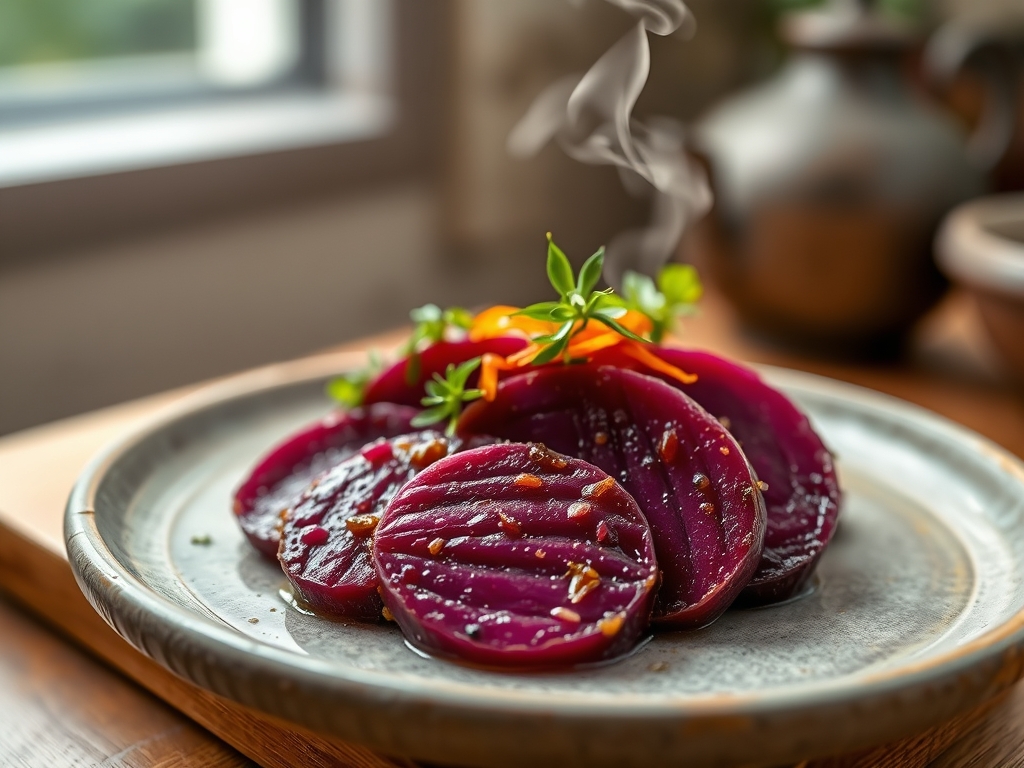
Imagine a landscape of deep indigo and velvet amethyst, where the earthy sweetness of a root vegetable meets the elegance of a fine pastry. When you master japanese purple sweet potato recipes, you are not just cooking; you are conducting a symphony of anthocyanins and complex starches that transform your dinner table into a high-end gallery of edible art.
The Gathers:
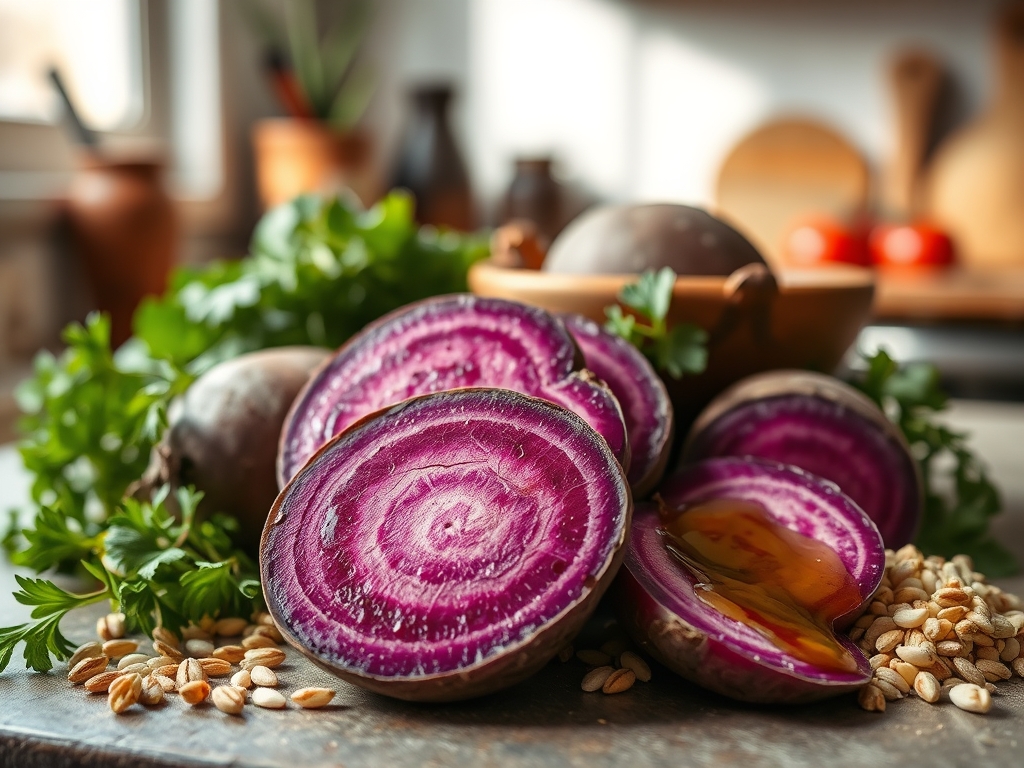
To execute these eight masterpieces, your mise-en-place must be precise. We are working with the Okinawan variety, known for its dense, starchy crumb, or the Murasaki, which features a chestnut-like finish. You will need a digital scale to ensure the ratio of tuber to binder is exact; guessing by volume leads to gummy textures.
Gather your aromatics: fresh ginger to provide a piquant counterpoint to the sugar, and high-fat coconut milk to infuse a silky mouthfeel. For the savory applications, have your saucier ready to build emulsions.
Smart Substitutions: If you cannot source the Okinawan variety, Stokes Purple potatoes are a viable alternative, though they possess a slightly more viscous moisture content. For a vegan profile, swap heavy cream for cashew cream to maintain the fat solids necessary for a stable emulsion.
The Clock:
Efficiency in the kitchen is about the Chef's Flow. Expect a total prep time of 30 minutes and a collective cooking window of 90 minutes. We utilize parallel processing: while your potatoes undergo thermal hydrolysis in the oven, you will be using a microplane to zest citrus or a bench scraper to portion out dough for gnocchi. By the time the tubers reach peak tenderness, your secondary components are already chilled or reduced, ensuring a seamless transition from prep to plate.
The Masterclass:
1. The Velvet Puree Base
Begin by roasting the potatoes whole in their skins. This concentrates the sugars through evaporation rather than diluting them in a boil. Once soft, pass the flesh through a fine-mesh sieve or a ricer to aerate the starch granules.
Pro Tip: This process prevents enzymatic browning and ensures a smooth texture. Passing the starch through a sieve breaks down the cellular walls without overworking the gluten-like proteins, preventing a gluey consistency.
2. Amethyst Gnocchi
Fold the cooled puree with "00" flour and a pinch of nutmeg. Use a bench scraper to cut the dough into uniform pillows. The goal is a pillowy interior with a slight structural bite.
Pro Tip: Cold potatoes are essential here. If the mash is hot, it will melt the flour's proteins prematurely, resulting in a heavy, dense dumpling rather than a light, airy one.
3. Miso-Glazed Roasted Wedges
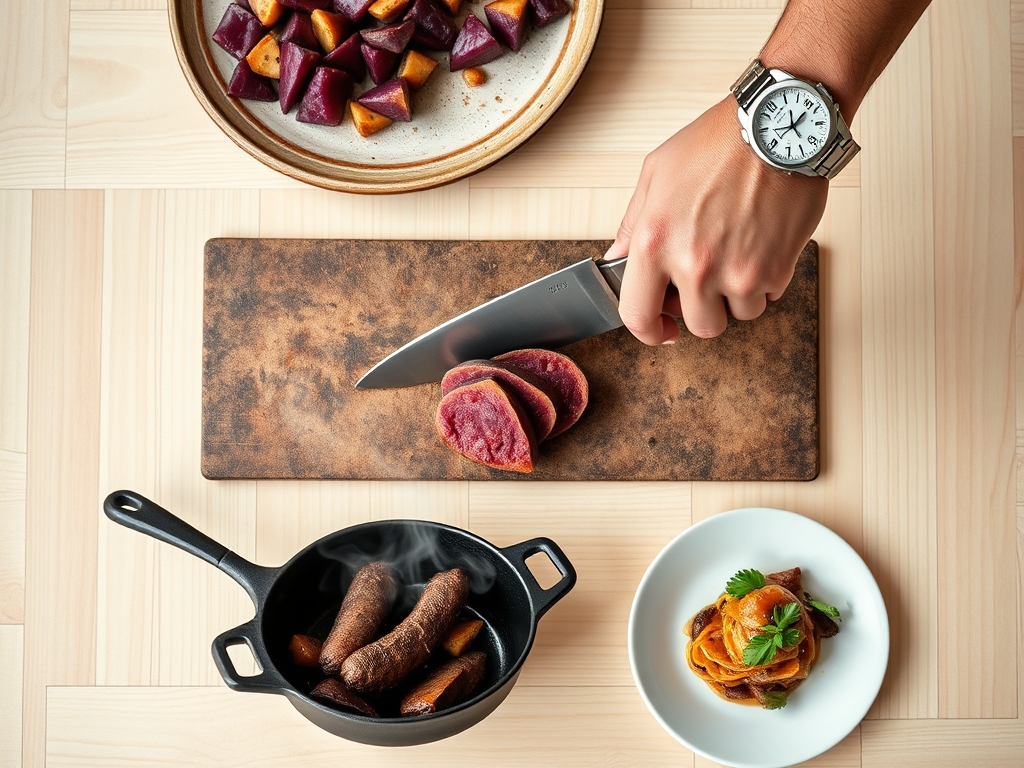
Slice the potatoes into uniform wedges using a sharp chef's knife. Toss them in a mixture of white miso, maple syrup, and neutral oil. Spread them on a parchment-lined baking sheet, ensuring no overlap.
Pro Tip: The high sugar content in miso encourages the Maillard reaction. By spacing the wedges, you allow steam to escape, which facilitates a crisp exterior rather than a soggy, steamed result.
4. Purple Sweet Potato Latte
Blend steamed milk with a tablespoon of the fine puree and a hint of vanilla. Use a handheld frother to create a micro-foam that suspends the purple particles in a cloud of white.
Pro Tip: The natural pectins in the potato act as a stabilizer for the milk foam. This creates a more viscous and long-lasting head on your latte compared to standard syrups.
5. Crispy Skin Chips
Use a mandoline to slice raw potatoes into paper-thin rounds. Fry them in small batches in a heavy-bottomed skillet filled with high-smoke-point oil until the edges just begin to curl.
Pro Tip: Soaking the slices in cold water for ten minutes removes excess surface starch. This prevents the chips from sticking together and ensures a shattering, professional crunch.
6. Savory Purple Gratin
Layer thin slices with Gruyere cheese and a garlic-infused cream. Bake until the top is golden and the center is tender when pierced with a paring knife.
Pro Tip: Use the carryover cooking principle. Remove the gratin when it is just slightly firm; the residual heat will finish the softening process without turning the potatoes into mush.
7. Purple Coconut Halwa
Slowly render the potato puree with ghee and cardamom in a non-stick pan. Stir constantly until the mixture pulls away from the sides, indicating the moisture has evaporated and the fats have integrated.
Pro Tip: Constant agitation prevents the sugars from scorching. This technique allows the flavors to infuse deeply into the starch molecules for a rich, fudge-like finish.
8. Tempura Purple Batons
Dredge batons in a light tempura batter made with sparkling water. Use tongs to dip them into 350-degree oil for a quick, flash-fry finish.
Pro Tip: The carbonation in the water creates tiny air pockets that expand rapidly in the heat. This results in a delicate, lace-like crust that protects the creamy interior.
The Deep Dive:
On a macro level, these japanese purple sweet potato recipes are nutritional powerhouses. They are rich in fiber and provide a significant dose of Vitamin A and C. The deep pigment comes from cyanidin and peonidin, antioxidants that help combat oxidative stress.
Dietary Swaps: To make these recipes Keto-friendly, reduce the portion size and pair with high-fat proteins. For Gluten-Free versions, utilize almond flour or arrowroot starch as a binder.
The Fix-It:
- Gummy Texture: This usually means the potato was over-processed in a blender. Fix it by folding in a bit of cornstarch to absorb excess moisture.
- Dull Color: If your purple turns grey, the pH is too high. Add a drop of lemon juice to restore the vibrant acidic environment the anthocyanins love.
- Burnt Edges: If the sugars caramelize too fast, move the tray to a lower oven rack and tent with foil to allow the center to cook through.
Meal Prep: To reheat, avoid the microwave. Use a toaster oven or a dry skillet. This restores the crispness of the exterior without making the starch "weep" or become rubbery.
The Wrap-Up:
Mastering these vibrant japanese purple sweet potato recipes is a masterclass in texture and color. You have learned to manipulate starches, balance piquant flavors, and use professional tools like the saucier and mandoline with confidence. Go forth and turn your kitchen into a laboratory of purple perfection!
The Kitchen Table:
Can I boil these potatoes instead of roasting?
Roasting is superior for japanese purple sweet potato recipes. Boiling introduces excess water, which can make your purees watery and your gnocchi gummy. Roasting concentrates the natural sugars and maintains a dense, velvety texture for better results.
Why did my purple potatoes turn blue?
This is a chemical reaction. Anthocyanins react to alkaline environments by turning blue or green. To fix this, add a small amount of acid, like lemon juice or cream of tartar, to shift the pH and restore the vibrant purple.
Are the skins edible on purple sweet potatoes?
Yes, the skins are highly nutritious and perfectly edible. When roasted or fried into chips, they provide a rustic texture and earthy flavor. Just ensure you scrub them thoroughly with a vegetable brush before cooking to remove any grit.
How do I store leftovers to keep them fresh?
Store cooked potatoes in an airtight container in the refrigerator for up to four days. For the best texture, reheat them in an oven or air fryer. This prevents the starch from becoming soggy, which often happens in the microwave.