
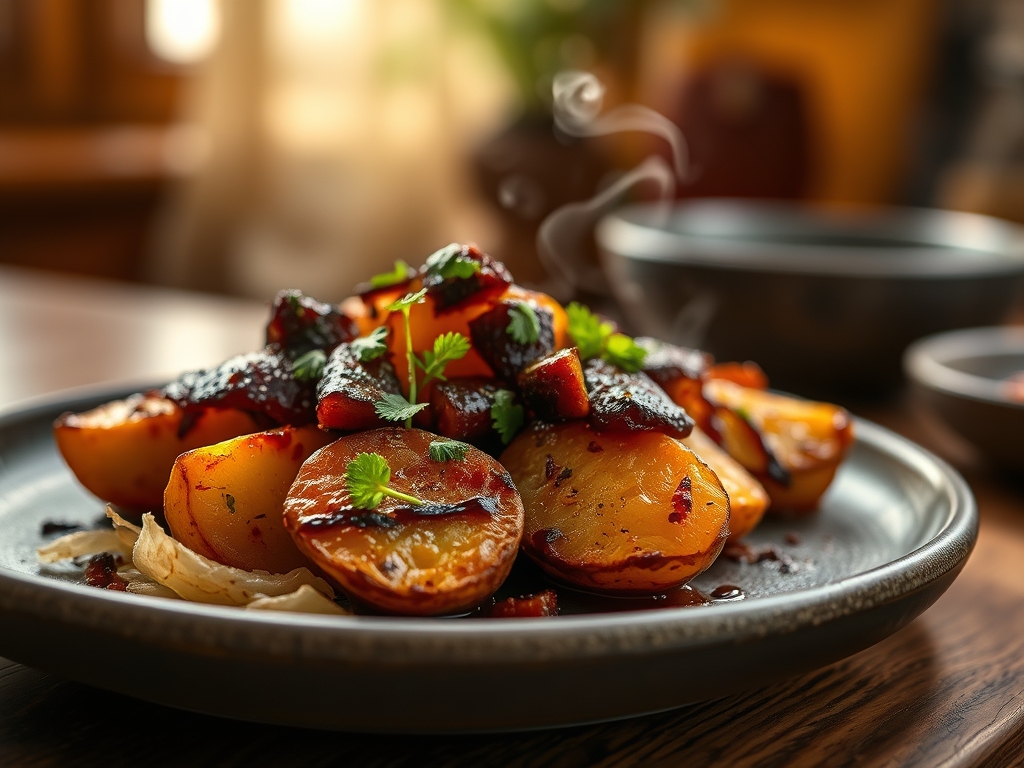
Imagine the scent of hickory smoke swirling around a heavy cast iron skillet while the afternoon sun dips below the horizon. There is something primal and perfect about the humble spud meeting the intense heat of the grate. When you master professional bbq potato recipes, you are not just grilling a side dish; you are engineering a masterpiece of texture and salt.
The secret to a world class potato lies in the balance between a fluffy, aerated interior and a shatteringly crisp skin. Most backyard cooks settle for "fine," but we are aiming for "unforgettable." To get there, we have to look past the starch and see the cellular structure of the tuber. Whether you are using a pellet grill or a classic charcoal kettle, the goal is to trigger the Maillard reaction without incinerating the delicate sugars. We are going to treat these potatoes with the same reverence as a prime ribeye. Grab your favorite apron and a cold drink; it is time to turn the simplest root vegetable into the star of the show.
The Gathers:
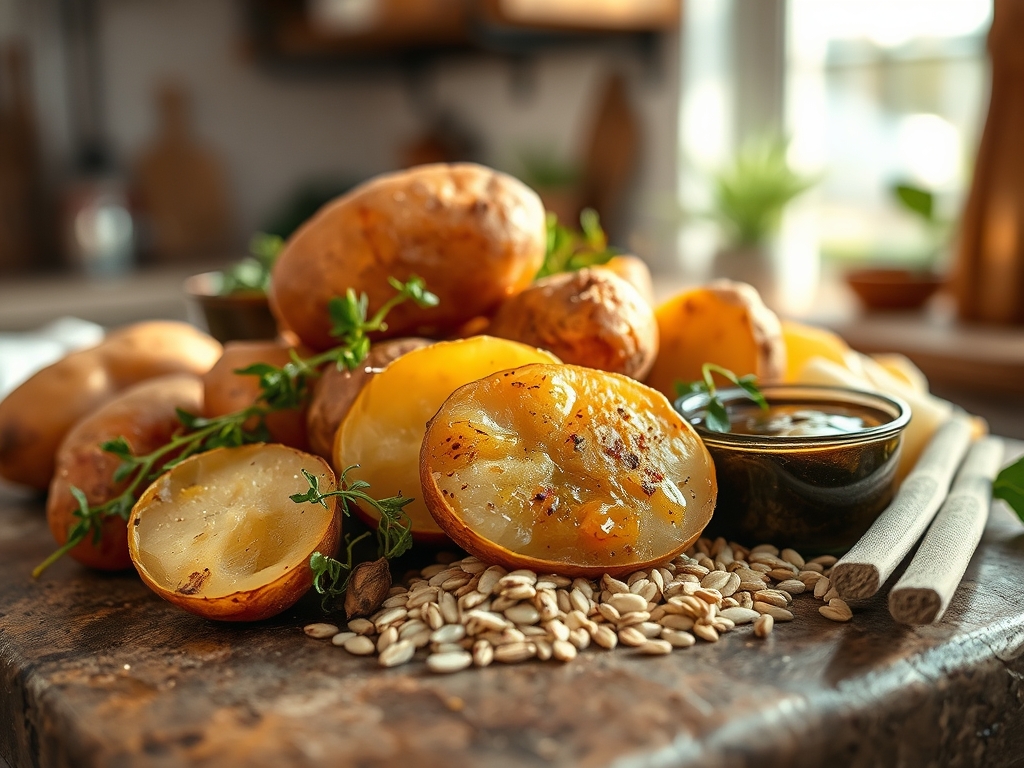
To achieve professional results, your mise-en-place must be precise. Start with high-starch Russets or waxy Yukon Golds. The Russets provide that iconic powdery texture due to their high amylose content, while Yukons offer a buttery, viscous mouthfeel. You will need a high-quality fat with a high smoke point; think rendered beef tallow or clarified butter (ghee) rather than extra virgin olive oil, which can turn acrid under direct flame.
Your spice kit should include smoked paprika for depth, garlic powder for an umami punch, and flaky sea salt to provide a tactile crunch. Use a digital scale to ensure your seasonings are balanced. For the "Smart Substitutions," if you find yourself without tallow, duck fat is a sublime alternative that adds a luxurious, gamey richness. If you are dodging nightshades, swap the paprika for ground sumac to keep that piquant brightness without the heat. Always have a bench scraper handy to move your chopped potatoes from the cutting board to the prep bowl without bruising the flesh.
The Clock:
The "Chef's Flow" is all about managing your thermal windows. Total active prep time is approximately 15 minutes, but the magic happens during the 45 to 60 minutes of cooking. Professional bbq potato recipes rely on a two-stage thermal process: the parboil and the sear.
By parboiling for 8 to 10 minutes before hitting the grill, you ensure the interior is fully hydrated and soft while the exterior is primed for crisping. This prevents the "raw center, burnt skin" tragedy. Once on the grill, you are looking at 20 minutes of indirect heat followed by a 5-minute high-heat finish to render any added fats and lock in the smoke. Use a digital thermometer to pull them when the internal temperature hits 205 degrees Fahrenheit; this is the sweet spot where the starch granules have fully burst.
The Masterclass:
1. The Precision Cut
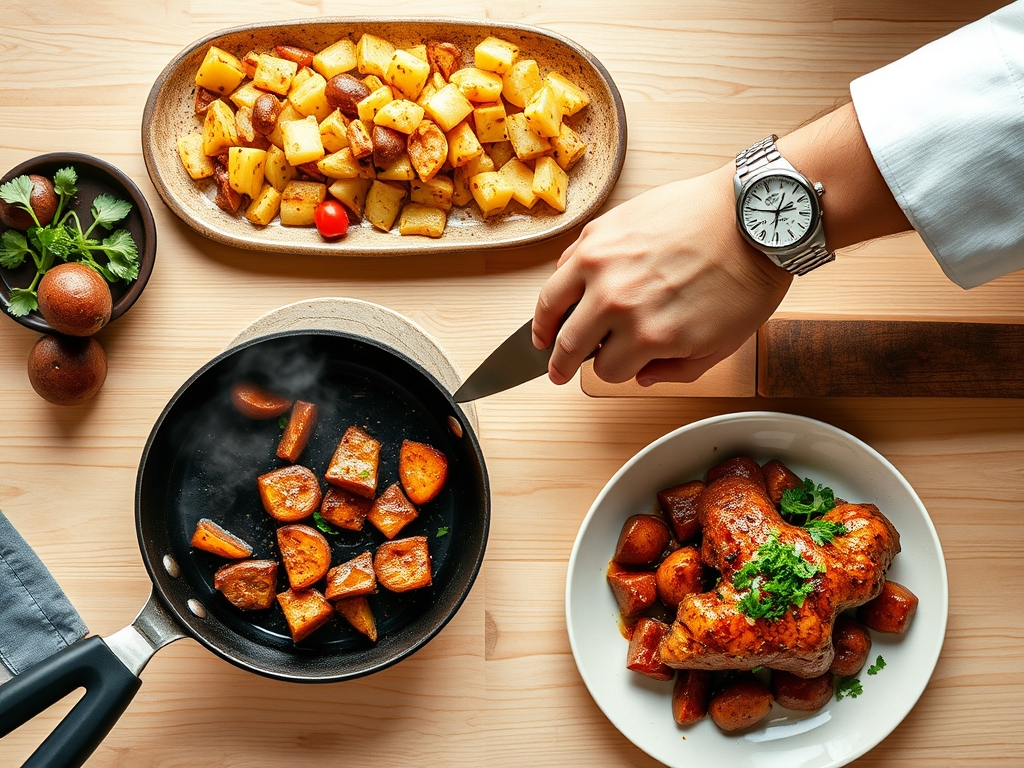
Use a sharp chef knife to create uniform 1.5-inch cubes. Uniformity is not just for aesthetics; it ensures every piece reaches the same level of gelatinization at the same time. If pieces vary in size, the small ones will dehydrate into pebbles before the large ones are tender.
Pro Tip: This prevents enzymatic browning. By keeping your cuts uniform and immediately submerging them in cold, salted water, you rinse away excess surface starch and prevent the potatoes from oxidizing and turning grey.
2. The Alkaline Parboil
Place your potatoes in a heavy-bottomed skillet or pot with cold water and a half-teaspoon of baking soda. Bring to a boil and simmer until the edges are just starting to fray.
Pro Tip: The baking soda raises the pH of the water, which breaks down the pectin on the potato's surface. This creates a starchy "slurry" that, once grilled, transforms into an incredibly thick and crunchy crust.
3. The Rough-Up
Drain the potatoes and let them steam-dry for two minutes. Use a bench scraper or a wooden spoon to toss them vigorously in a bowl until the outsides look "fuzzy."
Pro Tip: This increases the surface area for the Maillard reaction. More fuzz equals more tiny ridges that will catch the fat and heat, resulting in a superior crunch that mimics deep-frying.
4. The Fat Infusion
While the potatoes are warm, drizzle your rendered fat over them. Add your dry rub now. The heat from the potatoes will bloom the spices, releasing essential oils and making the flavor profile more vibrant.
Pro Tip: This is called lipid-infusion. Fat is a flavor carrier; by coating the warm starch in seasoned fat, you ensure the flavor penetrates the surface rather than just sitting on top.
5. The Indirect Zone
Set your grill for two-zone cooking. Place the potatoes on the cool side of the grate. Close the lid to allow the smoke to infuse the porous starch.
Pro Tip: This utilizes convection heat. The grill acts like an oven, circulating hot air to cook the potato through without scorching the delicate spices you just applied.
6. The High-Heat Finish
Move the potatoes directly over the coals or burners for the final five minutes. Use long-handled tongs to turn them frequently.
Pro Tip: Watch for thermal carryover. Potatoes hold heat exceptionally well. Pull them off the grill when they look slightly less brown than your "perfect" shade, as they will continue to darken for a minute after being removed.
7. The Acid Pop
Once off the grill, use a microplane to zest a fresh lemon over the pile and finish with a splash of apple cider vinegar or a dusting of "vinegar powder."
Pro Tip: Acid cuts through the heaviness of the rendered fat. It brightens the entire dish and resets the palate, making each bite feel as fresh as the first.
8. The Aerated Rest
Never crowd your finished potatoes in a deep bowl, or they will steam and lose their crunch. Spread them out on a wire rack or a wide platter.
Pro Tip: This prevents evaporative cooling from trapping moisture. Allowing air to circulate around each potato ensures the crust stays rigid and crisp until the moment you serve.
The Deep Dive:
From a macro perspective, potatoes are a powerhouse of potassium and complex carbohydrates. A standard serving provides roughly 160 calories, 4 grams of protein, and 37 grams of carbs. To make this keto-friendly, swap the potatoes for cauliflower florets, though you should skip the parboil step as cauliflower has a much higher water content. For a vegan version, use avocado oil or a high-quality vegan butter substitute to achieve that same golden finish.
The "Fix-It" guide for common pitfalls:
- Soggy Potatoes: This usually means you skipped the steam-drying step. If they are wet when they hit the fat, they will steam rather than sear. Fix: Return them to a dry pan over high heat for 2 minutes before grilling.
- Burnt Spices: If your garlic powder turns bitter, it was exposed to direct flame too long. Fix: Apply spices during the last 10 minutes of cooking next time, or use a "wet rub" with more oil.
- Sticking to Grates: This happens when the grill isn't clean or the potatoes weren't coated in enough fat. Fix: Use a saucier to melt a little extra butter and toss the potatoes halfway through the grill time.
For meal prep, reheating is a science. Avoid the microwave, which turns the starch gummy. Instead, use an air fryer or a toaster oven at 400 degrees for 5 minutes. This re-activates the fats and crisps the exterior to "day-one" quality.
The Wrap-Up:
Mastering professional bbq potato recipes is a rite of passage for any serious outdoor cook. It is about understanding how heat interacts with starch and fat to create something greater than the sum of its parts. By using techniques like the alkaline parboil and the lipid-infusion, you are elevating a simple side dish into a culinary event. Go ahead and show off at your next cookout; your friends won't know what hit them when they bite into that perfect, smoky crunch.
The Kitchen Table:
What is the best potato for grilling?
Russet potatoes are ideal for a fluffy interior, while Yukon Golds provide a rich, buttery flavor and hold their shape better. Both work beautifully for bbq potato recipes when parboiled first to ensure even cooking.
Why do my grilled potatoes turn out hard?
Hard potatoes usually result from skipping the parboiling step. Without that initial hydration in boiling water, the dry heat of the grill evaporates the internal moisture before the starch granules can fully soften and gelatinize.
Can I grill potatoes without foil?
Absolutely. Grilling directly on the grates or in a cast iron skillet allows for better smoke penetration and a superior crust. Foil actually traps steam, which can lead to a soggy texture rather than a crisp one.
How do I keep potatoes from sticking to the grill?
Ensure your grill grates are clean and well-oiled. Additionally, tossing your parboiled potatoes in a high-smoke-point fat, like beef tallow or avocado oil, creates a non-stick barrier that encourages a perfect sear.