
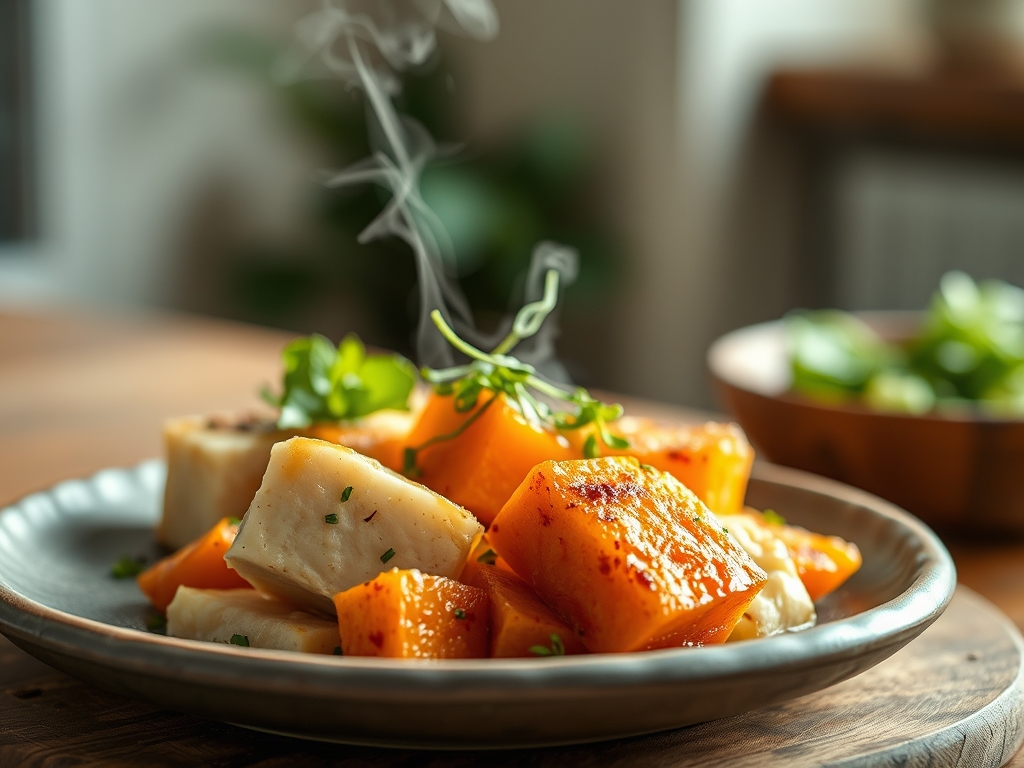
Imagine the scent of caramelized sugars hitting a searing hot surface while a block of protein transforms from bland to brilliant. Mastering tofu and sweet potato recipes is less about following a list and more about managing the beautiful friction between moisture and heat. It is a culinary dance of textures where soft, earthy starch meets the crisp, golden exterior of perfectly pressed soy.
When we talk about this specific pairing, we are looking at a nutritional powerhouse that doubles as a textural playground. The sweet potato provides a creamy, saccharine base that balances the neutral, porous nature of the tofu. Whether you are aiming for a piquant stir-fry or a slow-roasted tray bake, the secret lies in how you manipulate the starches and proteins. We are moving beyond the soggy, uninspired vegetarian plates of the past. Today, we are engineering flavor profiles that satisfy the most rigorous cravings through precise heat application and strategic seasoning.
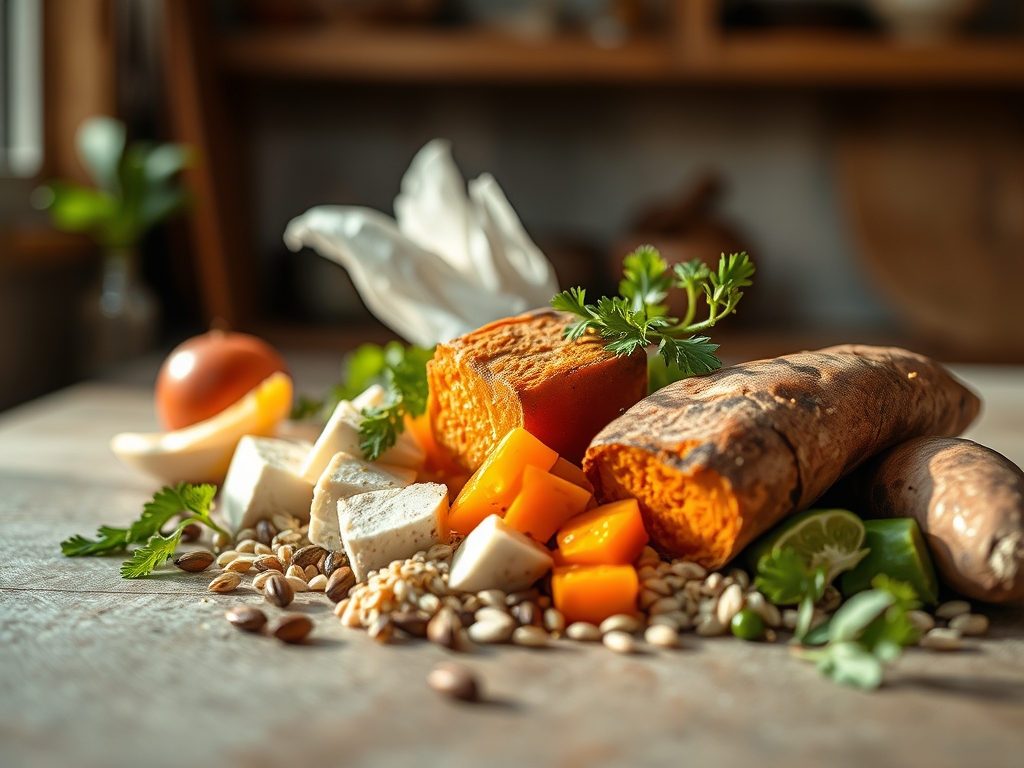
The Gathers:
To begin, clear your workstation with a bench scraper and set out your mise-en-place. For the tofu, you must secure extra-firm varieties. Anything softer contains too much interstitial water to achieve a proper sear. Your sweet potatoes should be heavy for their size, indicating high moisture content which will later steam the interior while the outside roasts.
You will need a heavy-bottomed skillet, preferably cast iron, to maintain consistent thermal mass. Grab your microplane for zesting aromatics like ginger and garlic; this tool increases the surface area of your aromatics, allowing them to infuse the cooking fat almost instantly. For the sauce, a small saucier is ideal for whisking together maple syrup, tamari, and rice vinegar into a viscous glaze.
Smart Substitutions:
If you find yourself without sweet potatoes, butternut squash offers a similar glycemic profile and starch density. For the tofu, tempeh is a fantastic substitute if you desire a nuttier, fermented funk. If you are avoiding soy entirely, chickpeas can be tossed in the same spice blend, though the cooking time will decrease by approximately ten minutes to avoid over-drying the legumes.
The Clock
Efficiency in the kitchen is about the Chef's Flow. This is the art of overlapping tasks so that no heat is wasted. Your total active prep time is 20 minutes, with a cook time of 35 minutes.
Start by preheating your oven. While the air inside the chamber begins to circulate, use those 10 minutes to press your tofu. This is non-negotiable. By the time the oven chime sounds, your sweet potatoes should be cubed and your tofu should be dry. The "flow" dictates that the potatoes hit the heat first because they require more time for the complex carbohydrates to break down into simple sugars. While they roast, you sear the tofu on the stovetop. This staggered start ensures everything reaches peak texture at the exact same moment.
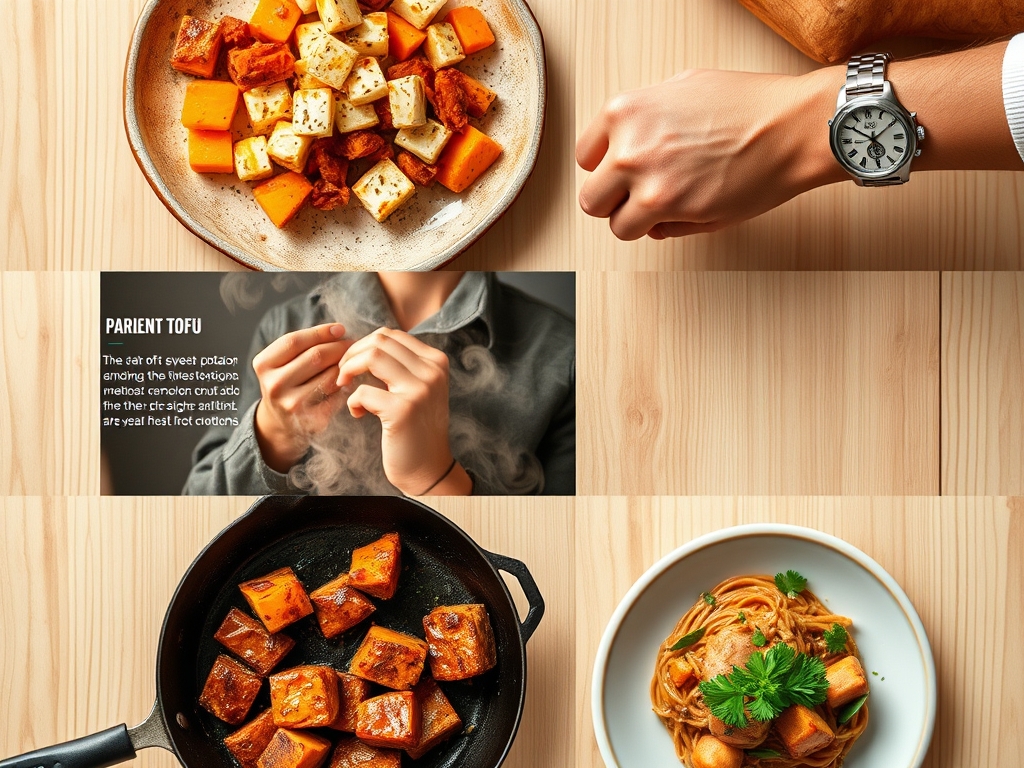
The Masterclass
1. The Press and Prep
Begin by slicing your extra-firm tofu into uniform cubes. Place them between lint-free towels and apply weight for at least 15 minutes. Removing this surface moisture is the only way to prevent the tofu from steaming rather than searing.
Pro Tip: This is about hydrophobicity. Water is the enemy of the Maillard reaction. By removing the liquid, you allow the surface temperature to rise above 300 degrees Fahrenheit, which is where the browning and flavor development actually happen.
2. Cubing for Surface Area
Peel your sweet potatoes and cut them into 1/2-inch cubes. Use a sharp chef's knife to ensure clean edges. Ragged edges will burn before the center of the potato is tender. Toss them in a high-smoke-point oil like avocado oil.
Pro Tip: This technique maximizes enzymatic browning. As the potatoes heat, the amylase enzymes break down starches into maltose. Smaller cubes mean more surface area for this caramelization to occur, resulting in a sweeter, deeper flavor profile.
3. The Initial Roast
Spread the sweet potatoes on a parchment-lined sheet pan. Do not crowd the pan. If the pieces are touching, they will trap steam, leading to a mushy texture. Roast at 425 degrees Fahrenheit for 20 minutes.
Pro Tip: We are utilizing convection heat here. The hot air must move freely around each cube to dehydrate the skin. This creates a structural "shell" that holds the creamy interior in place during the final toss.
4. The Stovetop Sear
While the potatoes roast, heat your heavy-bottomed skillet. Add oil and, once shimmering, add the pressed tofu. Use tongs to flip each piece only after a golden crust has formed. Resist the urge to shake the pan constantly.
Pro Tip: This is thermal carryover in action. Even after you remove the tofu from the pan, the internal temperature will continue to rise. Pulling them off the heat just before they look "perfect" prevents them from becoming rubbery as they sit.
5. The Emulsified Glaze
In your saucier, combine your liquid ingredients. Bring to a simmer over medium heat. Whisk vigorously as the mixture reduces to ensure the sugars and fats do not separate.
Pro Tip: You are creating a colloidal suspension. By whisking as the water evaporates, you force the oil and sugars to bond, creating a glossy, thick sauce that will cling to the tofu rather than sliding off into a puddle.
6. The Final Integration
Combine the roasted potatoes and seared tofu in a large mixing bowl. Pour the glaze over the top and use a silicone spatula to fold the ingredients gently. This prevents the softened potatoes from breaking apart.
Pro Tip: This stage relies on adhesion. The starch on the outside of the potatoes acts as a natural thickener for the glaze, creating a cohesive dish where every component is perfectly coated.
The Deep Dive
From a macro perspective, this dish is a balanced titan. You are getting high-quality plant protein from the soy and complex, slow-burning carbohydrates from the potatoes. It is naturally gluten-free if you use tamari instead of soy sauce. For those on a keto path, you can swap the sweet potato for cauliflower florets, though you will lose the specific starch-sugar interaction.
The Fix-It:
If your tofu is sticking to the pan, your heat is likely too low; wait for the protein to naturally release once the crust forms. If your potatoes are charred but hard inside, your oven is too hot; lower the temp and cover with foil to let the steam finish the softening. If the sauce is too thin, a small slurry of cornstarch and cold water will fix the viscosity instantly.
Meal Prep Science:
To maintain "day-one" quality, store the sauce separately if possible. When reheating, use an air fryer or a toaster oven rather than a microwave. Microwaves vibrate water molecules, which turns your crispy tofu into a sponge. A dry, circulating heat source will re-crisp the exterior while keeping the sweet potato interior lush.
The Wrap-Up
You now have the technical blueprint to turn humble ingredients into a restaurant-quality feast. Tofu and sweet potato recipes are the ultimate canvas for your culinary creativity. Once you master the moisture management and the heat ratios, you can pivot the flavor profile from spicy sriracha to savory miso with ease. Grab your tongs and get to work; your kitchen is about to smell incredible.
The Kitchen Table
Can I make this recipe oil-free?
Yes, use an air fryer to crisp the tofu and potatoes. However, you will lose the specific Maillard depth that fats provide. Use a splash of vegetable broth in the pan to prevent sticking while sautéing aromatics for flavor.
Why is my tofu always soggy?
You likely skipped the pressing stage or crowded the pan. Moisture must escape for browning to occur. Press your tofu for 15 minutes and ensure each cube has space in the skillet to allow steam to dissipate quickly.
What is the best way to reheat leftovers?
Avoid the microwave to prevent rubbery textures. Reheat in an air fryer at 350 degrees for five minutes or in a dry skillet over medium heat. This restores the exterior crunch of the tofu while warming the potato centers evenly.
Can I use frozen sweet potatoes?
You can, but the texture will be softer. Frozen vegetables are blanched before freezing, which breaks down cell walls. For the best results, roast them directly from frozen at a high temperature to evaporate excess moisture immediately.