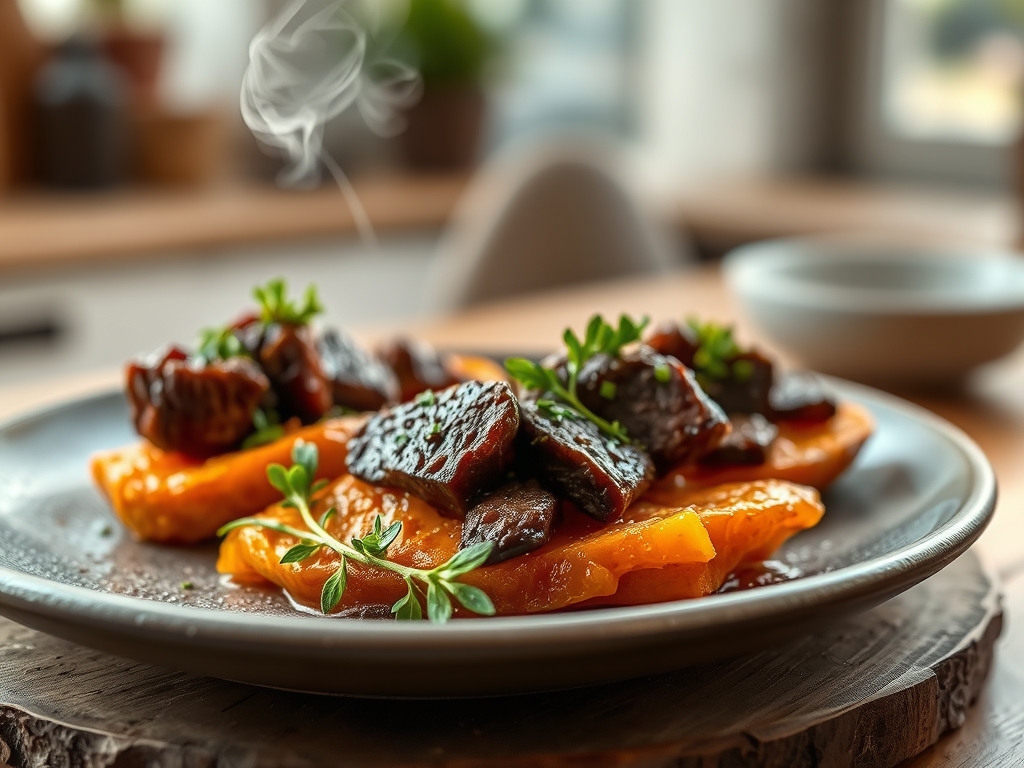
Imagine the scent of rendered fat meeting caramelizing sugars in a hot cast iron skillet. That is the fundamental magic behind beef sweet potato recipes. When we talk about hearty roasts, we are not just throwing protein and starch into a pan; we are orchestrating a complex chemical dance between savory collagen and earthy fructose. These six variations on the classic roast provide a masterclass in texture, ranging from crispy, salt-crusted cubes to velvet-soft braises that melt at the touch of a fork.
The beauty of combining these two powerhouses lies in their complementary profiles. Beef provides the deep, umami-rich base while sweet potatoes offer a vibrant, beta-carotene-packed sweetness that cuts through the richness. Whether you are prepping a weekday sheet pan meal or a slow-roasted Sunday centerpiece, understanding the physics of heat transfer and the chemistry of the Maillard reaction will elevate your kitchen game from hobbyist to pro. Let us dive into the technicalities of building a roast that tastes like a warm hug but looks like a five-star plating.
The Gathers:
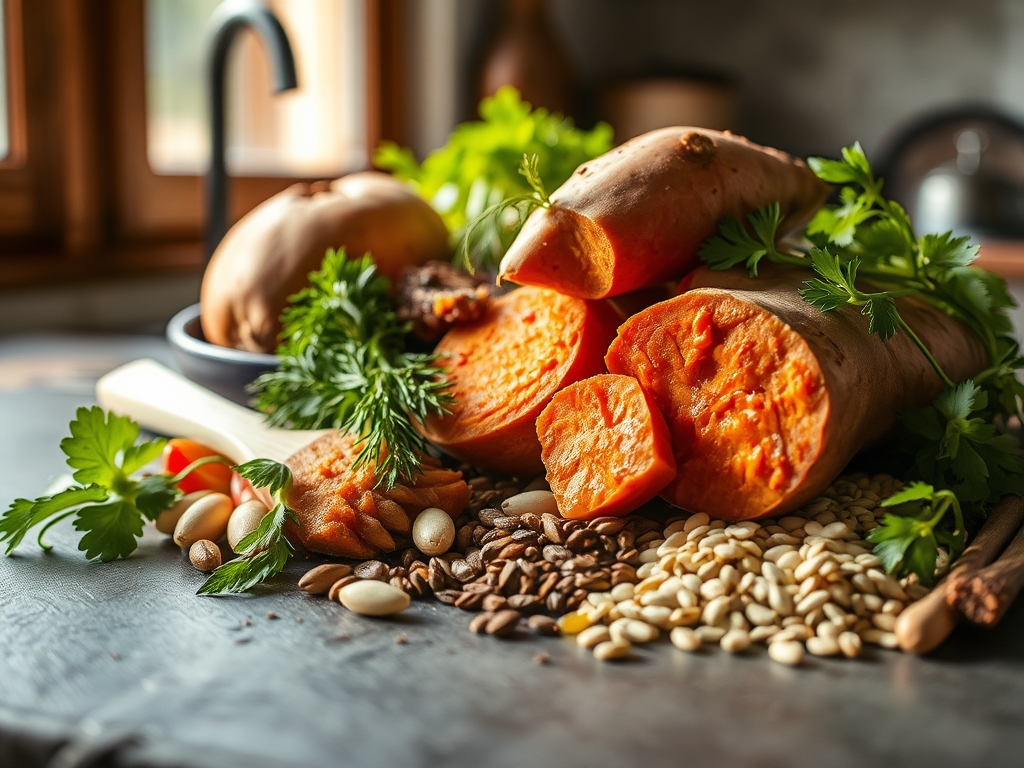
To achieve culinary excellence, your mise-en-place must be precise. Start with a high-quality cut of beef. For roasting, look for intermuscular fat (marbling) in cuts like chuck, tri-tip, or a well-trimmed brisket. On the vegetable side, select garnet or jewel sweet potatoes; their high moisture content ensures a creamy interior while the exterior skins crisp up beautifully.
You will need a heavy-bottomed skillet or a Dutch oven to maintain thermal mass. Grab your digital scale to ensure consistent sizing, as uniform surface area is the secret to even cooking. For aromatics, gather fresh rosemary, thyme, and plenty of garlic. A microplane is essential here for grating aromatics into a fine paste that will infuse the oil without burning.
Smart Substitutions:
If you cannot find high-quality beef, a thick-cut pork shoulder offers a similar fat-to-protein ratio. For a lower glycemic index, swap half the sweet potatoes for parsnips or rutabaga. If you are avoiding nightshades, replace paprika with ground sumac for a piquant kick that mimics that smoky depth.
The Clock
Efficiency in the kitchen is about "Chef's Flow." This is the psychological state where your movements are optimized to minimize downtime. For these beef sweet potato recipes, your active prep time is approximately 25 minutes, with a total cook time ranging from 45 minutes for medallions to 3 hours for a slow braise.
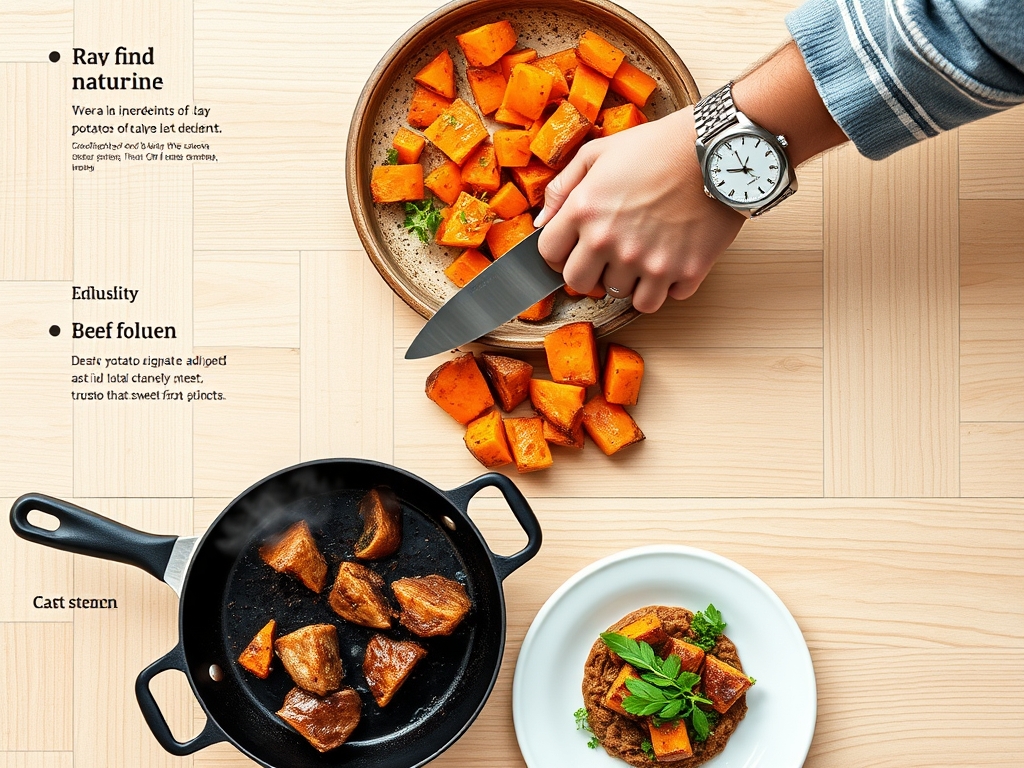
The flow begins with the protein. Salt your beef at least 40 minutes before cooking to allow for osmosis; the salt draws moisture out, dissolves, and is then reabsorbed into the muscle fibers, seasoning the meat deeply. While the beef rests, use a sharp chef's knife or a bench scraper to organize your cubed potatoes. By the time your oven reaches the target temperature, your ingredients are chemically primed for the heat.
The Masterclass
1. The Sear and Render
Begin by heating your skillet until it reaches the smoke point of your chosen fat. Pat the beef bone-dry with paper towels. Use tongs to place the meat in the pan, pressing down to ensure maximum surface contact.
Pro Tip: This step triggers the Maillard reaction, where amino acids and reducing sugars create hundreds of flavor compounds. If the meat is wet, it will steam rather than sear, capping the temperature at 212 degrees Fahrenheit and ruining the crust development.
2. Deglazing the Fond
Once the beef is removed, you will see brown bits stuck to the pan. This is called "fond." Pour in a splash of red wine or beef stock and use a wooden spoon to scrape the bottom.
Pro Tip: This process uses a solvent to lift concentrated flavor molecules. The liquid will become viscous as it reduces, creating a built-in sauce base that carries the essence of the seared protein throughout the entire dish.
3. The Vegetable Foundation
Toss your sweet potato cubes in the rendered beef fat and aromatics. Ensure every piece is coated in a thin layer of lipids. This prevents the potatoes from drying out and helps them conduct heat more efficiently.
Pro Tip: Sweet potatoes contain an enzyme called amylase that breaks down starch into maltose as they heat up. By starting them in a hot pan before roasting, you jumpstart this conversion, resulting in a sweeter, more complex flavor profile.
4. The Assembly and Roast
Place the beef back into the pan or onto the sheet tray with the potatoes. Arrange them so they are not overcrowded; air must circulate to prevent steaming. Slide the tray into the center rack of your oven.
Pro Tip: Use a digital probe thermometer to monitor the internal temperature. For a perfect roast, aim for "carryover cooking" awareness. Remove the beef 5 degrees before your target temperature, as the internal heat will continue to rise once it is out of the oven.
5. The Rest and Aerate
Once finished, move the beef to a cutting board. Let it rest for at least 10 minutes. This allows the muscle fibers to relax and reabsorb the juices that were pushed to the center during the roasting process.
Pro Tip: If you cut the meat too early, the viscous juices will run out, leaving the protein dry. Resting allows the liquid to redistribute, ensuring every bite is succulent and tender.
6. The Final Emulsion
While the meat rests, take the pan juices and whisk in a cold pat of butter or a teaspoon of Dijon mustard. This will aerate and thicken the liquid into a glossy pan sauce.
Pro Tip: This creates a stable emulsion where fat and water-based liquids are bound together. The result is a silky mouthfeel that ties the earthy potatoes and savory beef together into one cohesive experience.
The Deep Dive
From a nutritional standpoint, beef sweet potato recipes are a powerhouse. You are getting high-quality heme iron and B12 from the beef, paired with the fiber and Vitamin A from the potatoes. One standard serving contains roughly 35g of protein and 30g of complex carbohydrates.
Dietary Swaps:
For a Keto version, swap the sweet potatoes for cauliflower florets or radishes, which lose their pepperiness when roasted. For a Vegan twist, use thick "steaks" of cauliflower or lion's mane mushrooms, using liquid smoke and soy sauce to mimic the umami of the beef. All these recipes are naturally Gluten-Free, provided you use a GF-certified stock for deglazing.
The Fix-It:
- Tough Beef: If your roast is chewy, it likely did not reach the temperature where collagen breaks down into gelatin. Fix this by slicing it very thin against the grain to mechanically break the fibers.
- Soggy Potatoes: This happens from overcrowding. Next time, use two sheet pans. To fix it now, toss them under the broiler for 2 minutes to flash-dry the surface.
- Burnt Garlic: If your aromatics turned bitter, they were added too early. Balance the bitterness with a squeeze of lemon juice or a pinch of sugar.
Meal Prep Science:
To maintain "day-one" quality, reheat your roast in a covered dish with a tablespoon of water. This creates a steam chamber that prevents the beef from toughening. Avoid the microwave if possible; a low-temperature oven (300 degrees) is the best way to preserve the delicate protein structures.
The Wrap-Up
Mastering beef sweet potato recipes is about more than just following a list of steps; it is about respecting the ingredients and the physics of the kitchen. When you understand how to render fat and deglaze a pan, you unlock a world of flavor that goes far beyond a simple weeknight dinner. Go forth, grab your heavy-bottomed skillet, and turn those humble tubers and cuts of beef into a culinary masterpiece that will have everyone asking for your secret.
The Kitchen Table
What is the best cut of beef for roasting with sweet potatoes?
Chuck roast or tri-tip are ideal. They contain enough fat to stay moist during the time it takes for the sweet potatoes to soften. Leaner cuts like sirloin can work but require shorter cook times to avoid becoming dry.
How do I stop my sweet potatoes from getting mushy?
Do not crowd the pan. Ensure each cube has space for air to circulate. High heat (400F or above) is necessary to create a crust through sugar caramelization before the interior structure collapses into a mash-like consistency.
Can I make these recipes in a slow cooker?
Yes, but you will lose the crispy texture. To compensate, sear the beef in a skillet first to develop flavor. Add the potatoes halfway through the cook time so they do not disintegrate into the sauce over several hours.
Why is my beef always gray instead of brown?
You likely crowded the pan or the meat was too wet. Moisture creates steam, which boils the meat at 212F. For a deep brown crust, pat the meat dry and use a screaming hot, heavy-bottomed skillet with plenty of space.