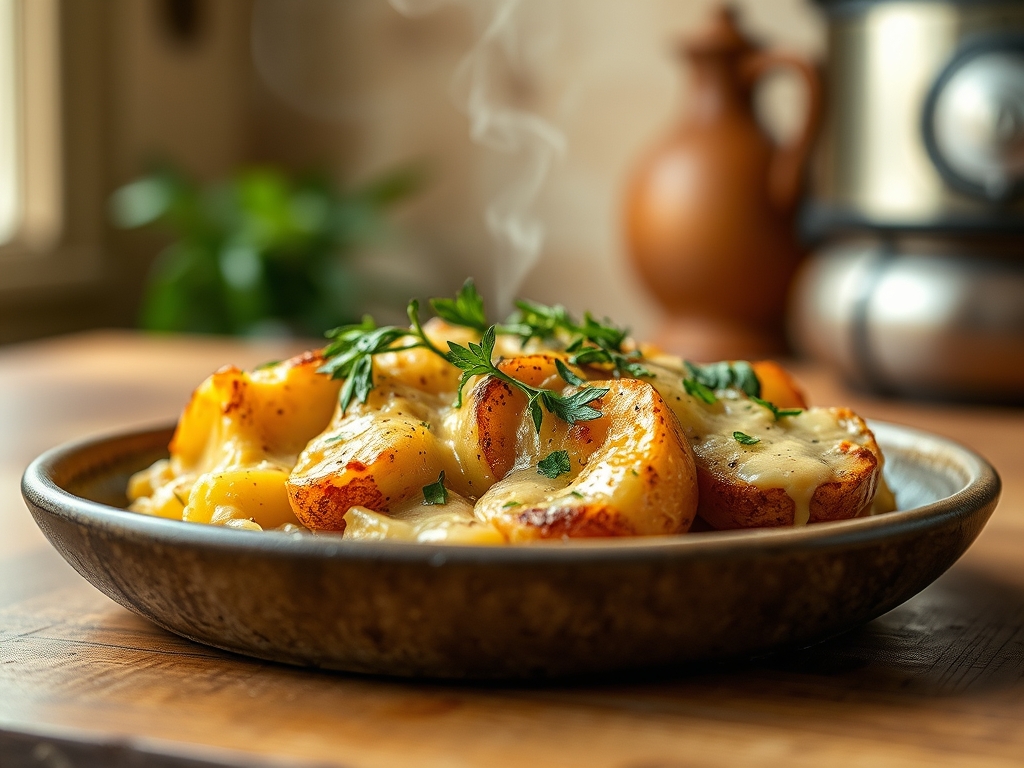
Picture the gold standard of comfort food: a bubbling, golden crust yielding to a velvet interior of salt and starch. When you master crockpot cheesy potato recipes, you are not just making a side dish; you are orchestrating a complex chemical transformation. The slow application of heat allows starches to gelatinize while fats and proteins emulsify into a glorious, unified sauce that coats every single bite.
The Gathers:
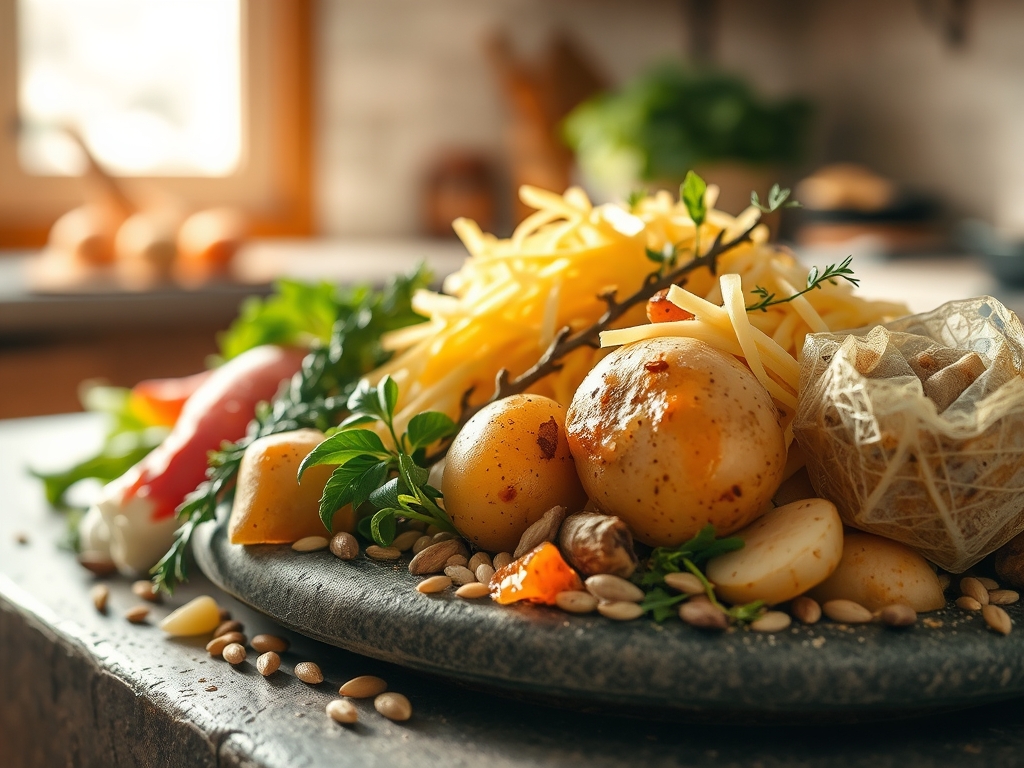
To achieve a professional result, your mise-en-place must be precise. Start with five pounds of Russet or Yukon Gold potatoes. Russets offer a high starch content that thickens the sauce naturally, while Yukons provide a buttery, waxy texture that holds its shape. You will need a digital scale to ensure your ratios are exact. For the dairy component, gather heavy cream, sharp cheddar, and gruyere. The gruyere adds a piquant depth and superior meltability due to its high oil-to-protein ratio.
Do not forget the aromatics. Use a microplane to grate fresh garlic and onion into a paste; this ensures the flavor is infused throughout the dish without leaving chunky textures. For the fat, use high-quality unsalted butter to control the sodium levels.
Smart Substitutions:
If you need to lighten the profile, swap half of the heavy cream for whole milk thickened with a teaspoon of cornstarch. For a deeper umami profile, add a tablespoon of nutritional yeast or a dash of Worcestershire sauce. If you lack gruyere, a high-quality fontina or gouda will provide that same viscous stretch we crave.
The Clock
Preparation requires roughly 20 minutes of active labor. This includes peeling, slicing with a mandoline for uniformity, and grating your cheese. The "Chef's Flow" dictates that you prep your aromatics first to let them aerate, followed by the potatoes to prevent oxidation. The cooking cycle is the true test of patience: 4 hours on high or 7 to 8 hours on low. The low setting is preferred as it prevents the dairy from "breaking" or curdling under intense heat.
The Masterclass
1. The Precision Slice
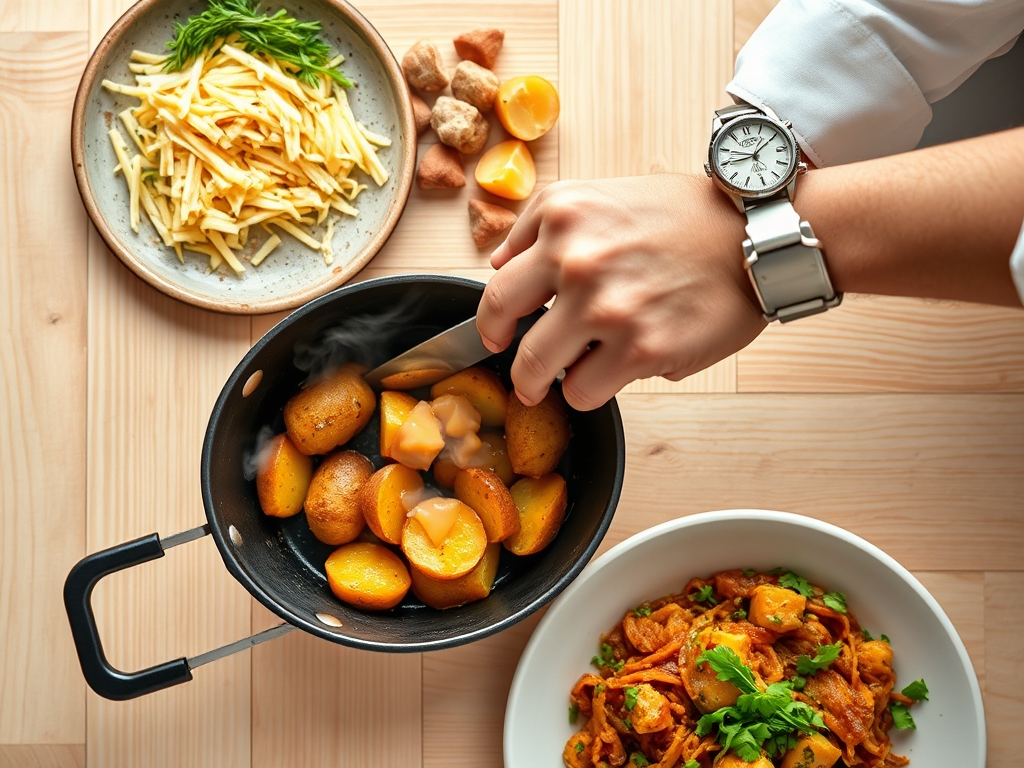
Use a mandoline or a sharp chef knife to slice potatoes into 1/8-inch rounds. Uniformity is the key to even cooking. If slices vary in thickness, some will turn to mush while others remain al dente.
Pro Tip: This uniformity ensures even heat distribution. When slices are identical, the thermal energy penetrates the starch granules at the same rate, preventing a localized "overcook" that ruins the texture.
2. The Aromatics Infusion
In a saucier over medium heat, melt your butter and sauté the garlic and onions until translucent. Do not brown them. Add your spices like smoked paprika and dry mustard.
Pro Tip: Fat is a flavor carrier. By heating your spices in butter first, you bloom the fat-soluble compounds, intensifying the flavor profile far more than if you simply tossed dry spices into the crockpot.
3. The Sauce Emulsification
Whisk your cream into the butter mixture slowly. Bring it to a gentle simmer, then remove from heat. Stir in half of your grated cheese until the mixture is smooth and viscous.
Pro Tip: This creates a stable emulsion. By melting the cheese into the liquid before adding it to the potatoes, you prevent the proteins from tightening and squeezing out the fat, which causes that dreaded oily separation.
4. The Layering Technique
Grease your crockpot liner. Layer one-third of the potatoes, followed by a sprinkle of the remaining cheese and a drizzle of the sauce. Repeat until all ingredients are used.
Pro Tip: Layering encourages capillary action. The sauce travels between the tight spaces of the potato slices, ensuring every millimeter of starch is seasoned and hydrated during the long cook.
5. The Low and Slow Simmer
Set your slow cooker to the low setting. Cover tightly. Avoid the temptation to lift the lid, as each peek releases a significant amount of steam and drops the internal temperature.
Pro Tip: Maintaining a constant temperature facilitates starch gelatinization. This is the process where starch granules swell and burst, creating the thick, creamy mouthfeel essential to the best crockpot cheesy potato recipes.
6. The Final Crisp
Thirty minutes before serving, remove the lid and sprinkle a final layer of cheese and perhaps some crushed panko or bacon bits.
Pro Tip: This stage allows for evaporative cooling on the surface, which thickens the top layer. If your crockpot insert is oven-safe, a quick 5-minute broil will trigger the Maillard reaction, creating those flavorful brown spots.
7. The Rest Period
Once the timer ends, turn the unit off and let the potatoes sit for 15 minutes before serving.
Pro Tip: This utilizes thermal carryover. The internal temperature continues to rise slightly, while the sauce sets as it cools, preventing a "soupy" presentation when you finally scoop it out.
The Deep Dive
Macro Nutrition: One serving typically contains 350 calories, 22g of carbohydrates, and 18g of fat. While calorie-dense, it provides significant potassium and calcium.
Dietary Swaps:
- Vegan: Use coconut cream and a high-quality cashew-based cheese. Ensure you add a pinch of turmeric for that classic golden hue.
- Keto: Swap the potatoes for steamed cauliflower florets. The cook time will drop by half to avoid total structural collapse.
- Gluten-Free: This recipe is naturally GF, provided you avoid using flour to thicken the sauce.
The Fix-It:
- Curdled Sauce: If the sauce looks grainy, the heat was too high. Next time, add a splash of cold heavy cream at the end and stir gently to re-emulsify.
- Hard Potatoes: Usually caused by acidic additions like lemon or too much salt too early. Ensure potatoes are fully submerged in liquid.
- Bland Flavor: You likely under-salted the base. Potatoes absorb massive amounts of salt. Use a bench scraper to lift the mass and fold in a teaspoon of sea salt at the end.
Meal Prep: To reheat, do not use a microwave if possible. Place leftovers in a heavy-bottomed skillet with a splash of milk. Heat over low, stirring constantly to maintain the emulsion. This ensures "day-one" creaminess.
The Wrap-Up
Mastering the science of crockpot cheesy potato recipes transforms a humble tuber into a culinary masterpiece. By focusing on the chemistry of emulsification and the patience of slow starch gelatinization, you create a dish that is both technically perfect and deeply comforting. Now, grab your digital scale and get to work; your kitchen is about to smell like heaven.
The Kitchen Table
Why are my crockpot potatoes still hard?
Potatoes remain hard if the temperature is too low or if you added acidic ingredients too early. Acids strengthen the pectin in potato cell walls, preventing them from softening. Always cook on "Low" for at least seven hours for optimal tenderness.
How do I prevent the cheese sauce from breaking?
Sauces break when the heat is too high or the fat-to-protein ratio is off. Use full-fat dairy and hand-grated cheese. Pre-shredded bags contain cellulose which prevents a smooth melt. Adding a splash of cream at the end helps re-emulsify.
Can I use frozen hash browns for this recipe?
Yes, frozen hash browns are a popular shortcut. However, they release more moisture than fresh potatoes. Reduce the added liquid by twenty percent and check for doneness at the three-hour mark to avoid a mushy, overcooked texture.
What is the best potato for slow cooking?
Yukon Gold potatoes are the professional choice. They possess a medium starch content that provides a creamy texture while maintaining their structural integrity. Russets are great for a thicker sauce but may break down more during an eight-hour cook cycle.