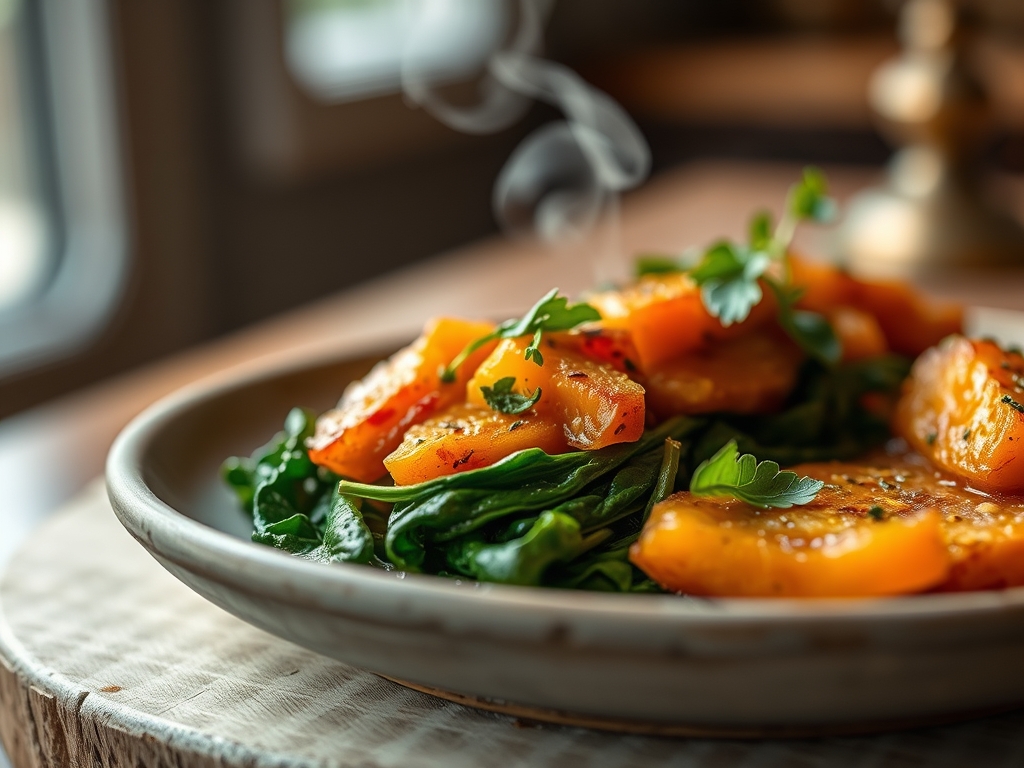
Imagine a heavy-bottomed skillet hissing as cold, vibrant greens hit a pool of shimmering olive oil. The kitchen fills with the scent of caramelizing sugars and earthy iron. Mastering spinach and sweet potato recipes is less about following a list of instructions and more about managing a delicate chemical marriage between dense, starchy tubers and fleeting, water-heavy leaves. It is the ultimate culinary study in contrast.
The sweet potato provides a creamy, saccharine base that anchors the meal; meanwhile, the spinach offers a sharp, mineral brightness that cuts through the richness. Whether you are folding them into a silky curry or tossing them in a high-heat roast, these two ingredients are a nutritional powerhouse duo. They offer a masterclass in texture management. You are looking for that perfect moment where the potato is fork-tender with a crisp exterior, and the spinach is just barely wilted, retaining its structural integrity without becoming a sodden mess.
Let us get into the grit of it. We are not just making dinner; we are engineering a balance of pH, moisture, and Maillard-driven flavor. Grab your favorite apron and let us dive into the technical beauty of these nine versatile pairings.
The Gathers:
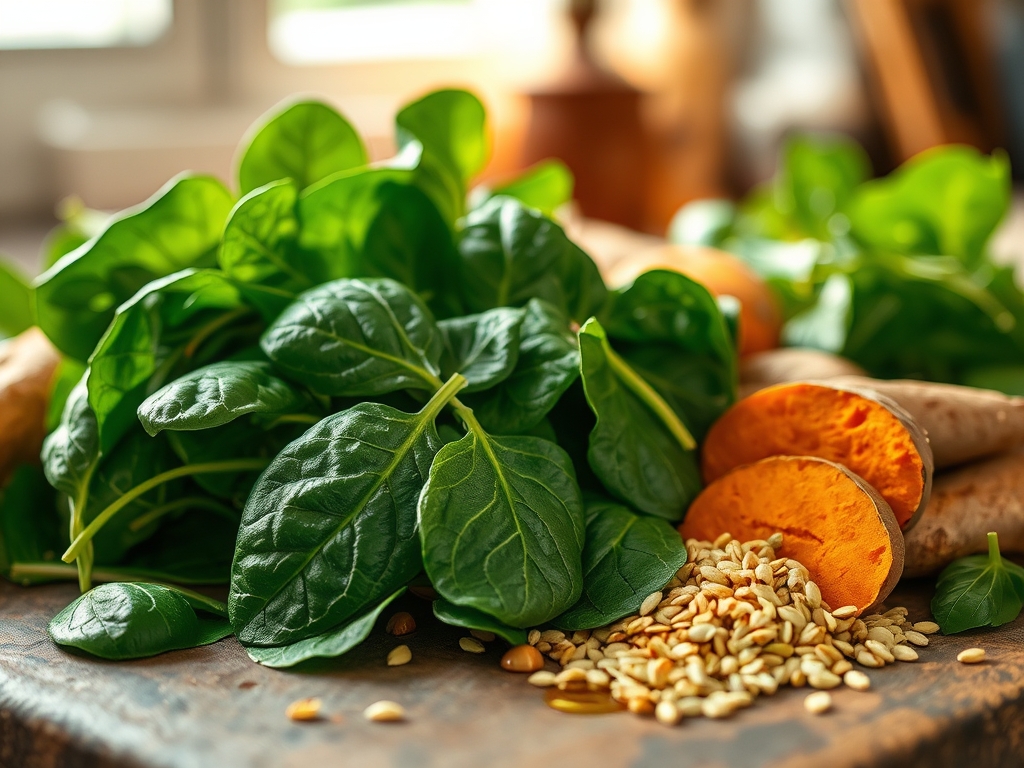
To execute these spinach and sweet potato recipes with precision, your mise-en-place must be flawless. Start with your tubers. Look for Beauregard or Jewel varieties for high sugar content. You will need a sharp chef's knife to achieve uniform cubes; consistency in size ensures a synchronized cooking rate. For the greens, choose mature bunched spinach for stews to withstand the heat, or delicate baby spinach for quick sautés.
Your pantry staples should include a high-smoke-point fat like avocado oil or ghee to facilitate browning without burning. Aromatics are non-negotiable. Fresh garlic, shallots, and ginger provide the volatile aromatic compounds that bridge the gap between the sweet and the savory. Have your microplane ready for zesting citrus or grating hard cheeses like Pecorino Romano to add a salty, umami-rich finish.
Smart Substitutions:
If you cannot find fresh spinach, frozen leaf spinach works for stews if you squeeze out every drop of excess moisture using a clean kitchen towel. No sweet potatoes? Butternut squash offers a similar starch profile and glycemic index. For a vegan fat swap, use refined coconut oil; it provides the necessary lipids for roasting without an overpowering tropical scent.
The Clock
Efficiency in the kitchen is about the "Chef's Flow." This is the sequence of tasks that minimizes downtime and maximizes heat management. For most of these pairings, expect a total time of 35 to 45 minutes.
The first 10 minutes are dedicated to mechanical prep. Use a bench scraper to clear your board quickly. The middle 25 minutes are the "active heat" phase. Sweet potatoes require a longer thermal exposure to break down complex starches into maltose. The final 5 minutes are the "flash finish" where the spinach is introduced. Because spinach is 90 percent water, it cooks in seconds. Adding it too early results in a dull, greyish hue and a loss of folate. Respect the clock, and the textures will reward you.
The Masterclass
1. The High-Heat Roast
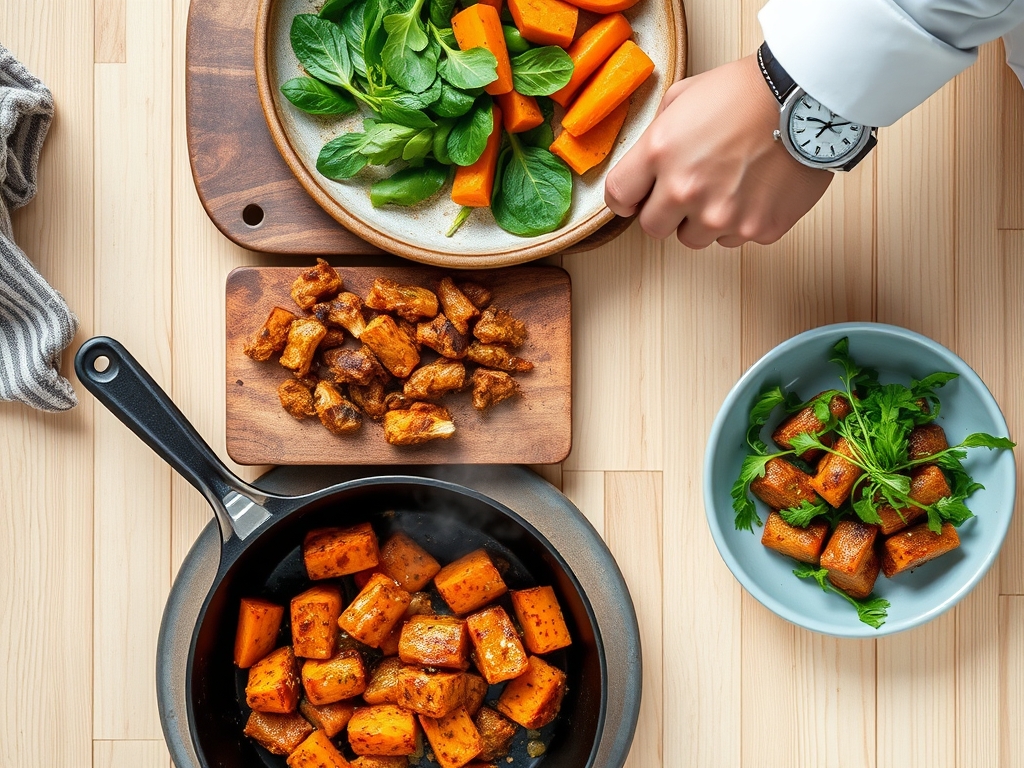
Spread your cubed sweet potatoes on a preheated sheet pan. Do not crowd them. Crowding creates steam, which prevents the Maillard reaction.
Pro Tip: This chemical reaction occurs between amino acids and reducing sugars at temperatures above 285 degrees Fahrenheit. It creates the complex, nutty flavors we crave.
2. The Saucier Simmer
When making a spinach and sweet potato curry, use a saucier to ensure even heat distribution. Deglaze the pan with coconut milk to pick up the fond.
Pro Tip: Deglazing releases the caramelized bits stuck to the bottom of the pan, incorporating concentrated flavor back into the liquid phase of your dish.
3. The Emulsified Toss
Whisk a piquant dressing of lemon, tahini, and garlic. Slowly stream in oil to create a stable emulsion.
Pro Tip: Emulsification is the process of forcing two immiscible liquids, like oil and water, into a homogenous mixture using a surfactant like mustard or lecithin.
4. The Wilt and Fold
Add the spinach to your hot potatoes only after you have turned off the primary heat source. Use tongs to gently fold the leaves.
Pro Tip: This utilizes thermal carryover. The residual heat of the potatoes is sufficient to soften the spinach cell walls without destroying the chlorophyll.
5. The Aerated Mash
For a vibrant side dish, mash steamed sweet potatoes and fold in chiffonade-cut spinach.
Pro Tip: Aeration during mashing incorporates oxygen, making the texture light and fluffy rather than dense and gluey. Avoid overworking the starch to prevent a gummy consistency.
6. The Textural Garnish
Finish your dish with something crunchy, like toasted pepitas or slivered almonds.
Pro Tip: Contrast is a key component of sensory perception. The crunch provides a "haptic break" from the soft, viscous textures of the main ingredients.
The Deep Dive
Nutritionally, this pairing is a powerhouse. Sweet potatoes are dense in Beta-carotene and fiber, while spinach provides non-heme iron and Vitamin K. To maximize iron absorption, always pair these recipes with a Vitamin C source like lime juice.
Dietary Swaps:
For a Keto-friendly version, swap the sweet potato for cauliflower florets to lower the net carb count. For a protein boost, add chickpeas for a vegan option or seared salmon for an omega-3 rich meal.
The Fix-It:
- Soggy Spinach: You added it too early. Next time, wait until the very last minute. Fix it now by draining the excess liquid and adding a handful of fresh leaves to absorb moisture.
- Hard Potatoes: The exterior is brown but the inside is raw. This happens when the heat is too high. Lower the temp and cover the pan with a lid for three minutes to create a steam environment.
- Bland Flavor: You likely under-salted the potatoes during the prep phase. Add a splash of apple cider vinegar or a squeeze of lemon. Acid brightens the dish and mimics the effect of salt.
Meal Prep:
When reheating, avoid the microwave if possible. It turns spinach into a rubbery texture. Instead, use a skillet with a teaspoon of water. The steam will gently revive the potatoes without overcooking the greens.
The Wrap-Up
You now have the technical blueprint to master spinach and sweet potato recipes like a seasoned pro. By understanding the science of heat, the importance of mise-en-place, and the beauty of textural contrast, you can transform these humble ingredients into a sophisticated meal. Cooking is a series of small, intentional victories. Go claim yours in the kitchen!
The Kitchen Table
Can I use frozen spinach for these recipes?
Yes, but you must thaw it completely and squeeze out all excess liquid using a clean cloth. This prevents your dish from becoming watery and ensures the flavors remain concentrated rather than diluted.
How do I stop sweet potatoes from sticking to the pan?
Ensure your pan and oil are fully preheated before adding the potatoes. Use a heavy-bottomed skillet and avoid moving the potatoes for the first five minutes to allow a proper crust to form through the Maillard reaction.
Why does my spinach turn brown so quickly?
Spinach turns brown when the chlorophyll molecules react with acids or are exposed to excessive heat for too long. To keep it vibrant green, fold it in at the very end of the cooking process.
Is it better to peel sweet potatoes or leave the skin on?
Leaving the skin on provides more fiber and a rustic texture. If you choose to keep the skin, scrub the tubers thoroughly with a vegetable brush to remove any grit before dicing and roasting.