
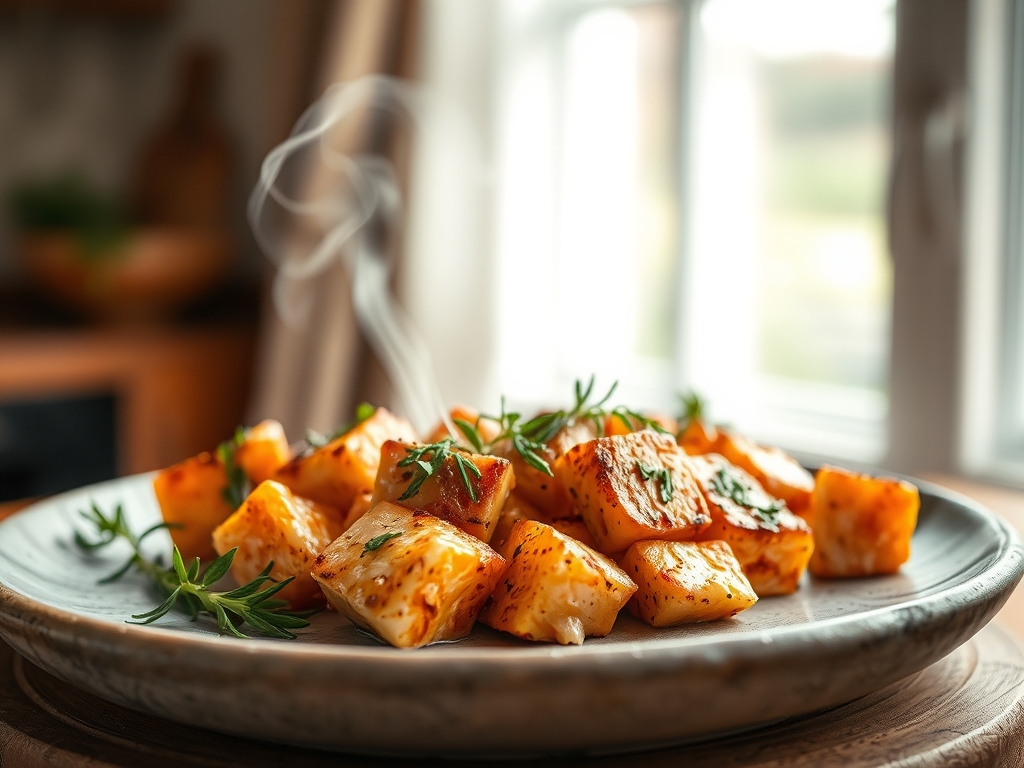
Picture the sound of a heavy-bottomed cast iron skillet meeting a high-heat flame; it is a rhythmic, metallic promise of the meal to come. As the surface temperature climbs, you drop in pink, glistening cubes of Atlantic fish. The immediate sizzle is not just noise; it is the sound of moisture evaporating to make room for a golden crust. These cubed salmon recipes are your secret weapon for weeknight elegance. Within minutes, the protein transforms from translucent silk to flaky, caramelized perfection. It is fast, it is sophisticated, and it is scientifically designed to satisfy your craving for something both healthy and indulgent.
The beauty of cutting your fillets into uniform pieces lies in the surface area. By increasing the exposed edges, you maximize the Maillard reaction. This chemical interplay between amino acids and reducing sugars creates that savory, umami-rich exterior we all crave. You are no longer just cooking fish; you are engineering a texture profile that balances a crisp snap with a buttery, medium-rare interior. Whether you are tossing them in a piquant citrus glaze or a viscous honey-garlic reduction, the result is a high-density flavor bomb that fits perfectly on a fork. Let us get into the technicalities of making these cubes the star of your kitchen rotation.
The Gathers:
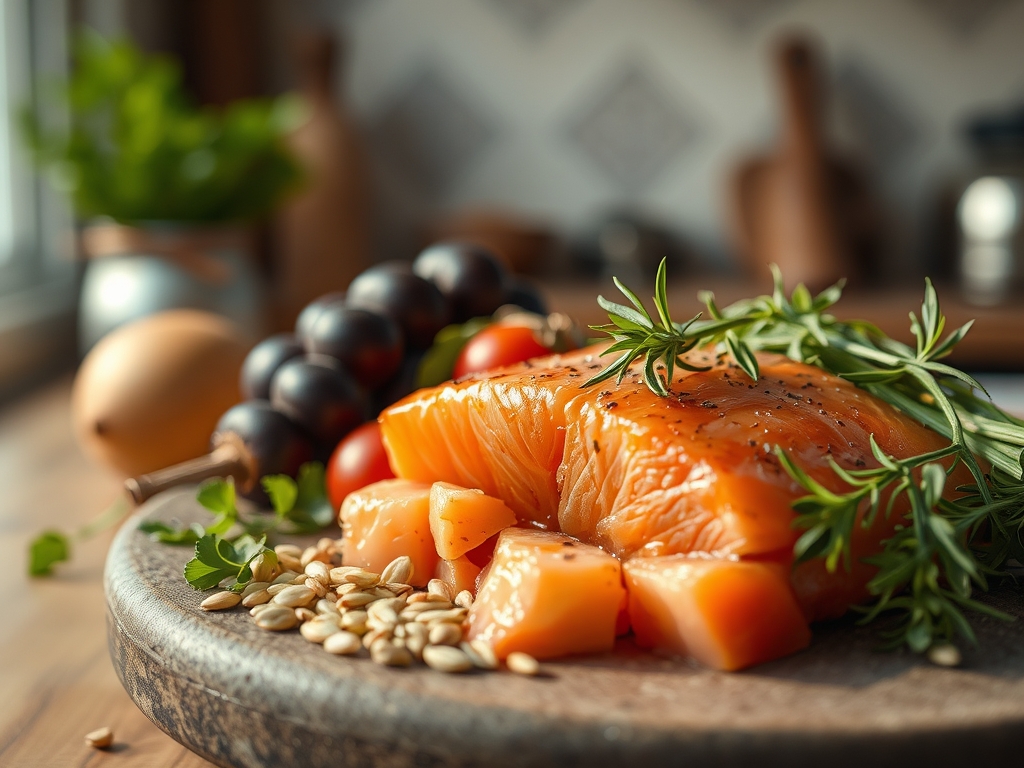
To execute these cubed salmon recipes with precision, your mise-en-place must be flawless. Start with a fresh side of salmon, ideally weighing around 1.5 pounds. You will need a sharp chef knife or a flexible boning knife to ensure clean, geometric cuts without tearing the delicate muscle fibers. Use a digital scale to portion your aromatics; precision here prevents one flavor from overpowering the natural sweetness of the fish.
Gather your liquids in a small saucier. You will want a high-smoke point oil, such as avocado or grapeseed oil, to facilitate the sear without acrid oxidation. For the flavor base, reach for fresh ginger and garlic. Use a microplane to grate these into a fine paste; this increases the surface area for infusion, allowing the volatile oils to permeate the cooking fat almost instantly.
Smart Substitutions:
If you are avoiding soy, coconut aminos offer a similar viscosity and salt profile with a hint of sweetness. For those seeking a lower glycemic index, replace honey with a touch of monk fruit syrup or a splash of fresh orange juice to provide the necessary sugars for caramelization. If you lack a heavy skillet, a stainless steel pan works, but you must be vigilant about temperature control to prevent sticking.
The Clock:
In the culinary world, we talk about the Chef's Flow. This is the art of sequencing tasks to eliminate "dead time" in the kitchen. For these cubed salmon recipes, the total active time is approximately 25 minutes.
- Prep (15 Minutes): This includes skinning the fish, cubing it into 1-inch squares, and whisking your sauces. Use a bench scraper to clear your board efficiently between tasks.
- The Sear (6 Minutes): The actual cooking happens rapidly. You are looking for 90 seconds per side to achieve a medium finish.
- The Glaze (4 Minutes): Deglazing the pan and reducing the sauce to a nappe consistency happens in the final moments.
By the time your timer dings, the internal temperature should hit 125 degrees Fahrenheit, allowing for thermal carryover to bring it to a perfect 130 degrees during the rest.
The Masterclass:
1. The Precision Cut
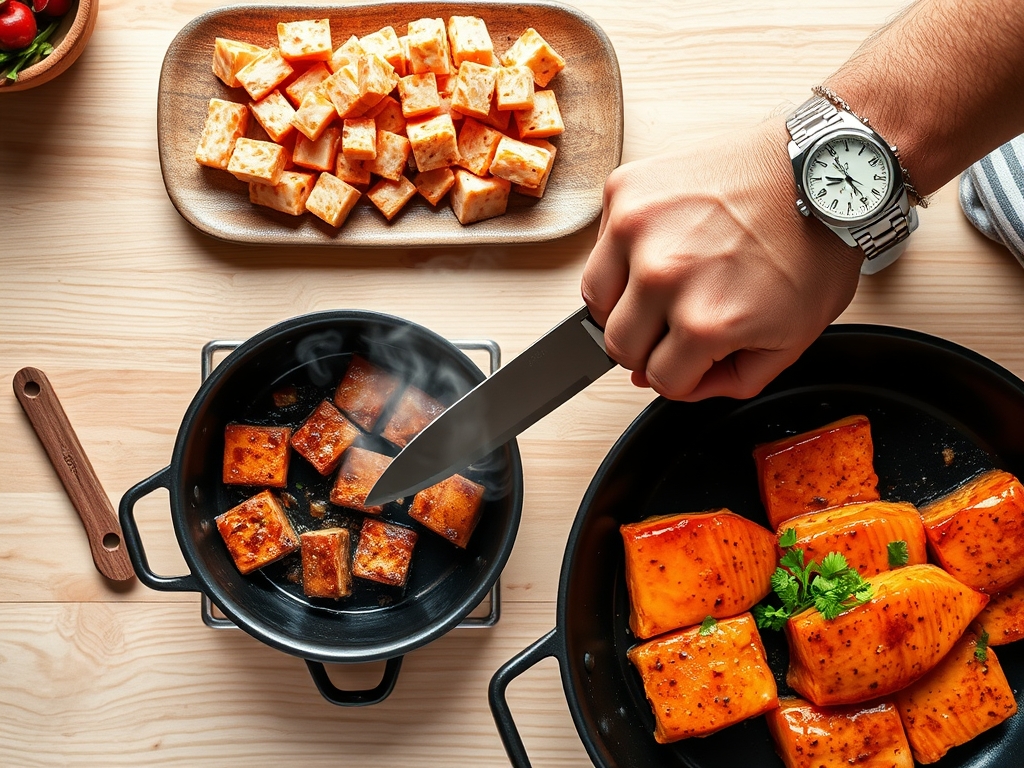
Lay your fillet flat and remove the skin by sliding your knife at a shallow angle. Cut the flesh into uniform 1-inch cubes. Uniformity is not just for aesthetics; it ensures every piece reaches the target internal temperature at the exact same moment.
Pro Tip: This is about thermal equilibrium. If pieces vary in size, the small ones will dehydrate and become chalky before the large ones lose their raw centers.
2. The Surface Prep
Pat the salmon cubes bone-dry with a paper towel. Season them with kosher salt and black pepper just seconds before they hit the pan. Salt is hygroscopic, meaning it draws moisture to the surface; if you salt too early, you will end up steaming the fish in its own juices.
Pro Tip: Removing surface moisture prevents the formation of a steam barrier, allowing for enzymatic browning to occur immediately upon contact with the hot oil.
3. The High-Heat Sear
Heat your skillet until the oil shimmers and barely begins to smoke. Arrange the cubes in a single layer using tongs, ensuring they do not touch. Crowding the pan drops the temperature, leading to a lackluster, gray exterior.
Pro Tip: This stage utilizes conduction. The direct heat transfer from the metal to the protein creates a crust that seals in the fats, keeping the interior moist.
4. The Deglaze and Emulsify
Once the salmon is browned, remove it briefly or push it to the side. Pour your prepared sauce into the hot pan. Use a wooden spoon to scrape up the brown bits (the fond) stuck to the bottom. Whisk in a cold pat of butter or a splash of cream to finish.
Pro Tip: This is pan-sauce emulsification. The fats in the butter bind with the aqueous liquid and the flavorful fond to create a glossy, viscous coating that clings to the salmon.
The Deep Dive:
Macro Nutrition
A standard serving of these cubed salmon recipes provides roughly 35 grams of high-quality protein and 20 grams of healthy fats, primarily Omega-3 fatty acids. These fats are essential for cognitive function and reducing systemic inflammation. The caloric density remains moderate, making this an ideal choice for muscle recovery or weight management.
Dietary Swaps
- Vegan: Swap the salmon for extra-firm tofu pressed for 30 minutes. Use the same searing technique to achieve a "skin-like" crust.
- Keto: Ensure your glaze uses erythritol instead of sugar and serve over a bed of riced cauliflower to keep net carbs under 5 grams.
- GF: Always use tamari or coconut aminos to ensure the dish is 100% gluten-free.
The Fix-It: Common Pitfalls
- The Salmon Sticks: You likely tried to flip it too early. Protein bonds to the pan initially but will naturally "release" once the crust has formed. Wait for the sear to finish.
- The Sauce is Too Thin: You did not allow for enough reduction. Simmer the sauce on high heat for an extra 60 seconds to evaporate excess water and concentrate the sugars.
- The Fish is Dry: This is a result of over-coagulation of proteins. Pull the fish off the heat when it still looks slightly translucent in the center; the residual heat will finish the job.
Meal Prep and Reheating
To maintain "day-one" quality, store the salmon and sauce separately if possible. When reheating, avoid the microwave, which vibrates water molecules and toughens the fish. Instead, use a low-heat skillet with a teaspoon of water and a lid. This creates a gentle steam bath that rehydrates the protein without overcooking it.
The Wrap-Up:
Mastering cubed salmon recipes is like learning a new dialect of flavor. It is fast, efficient, and incredibly rewarding for anyone who values both nutrition and culinary flair. By understanding the physics of the sear and the chemistry of the glaze, you have graduated from a home cook to a kitchen scientist. Now, grab your skillet, fire up the range, and turn those pink cubes into a masterpiece. Your dinner table is about to get a serious upgrade.
The Kitchen Table:
Why do my salmon cubes fall apart in the pan?
This usually happens if the fish is overcooked or handled too much. Use a wide spatula or tongs to turn them gently. Ensure your pan is hot enough to create a firm crust that holds the structure together.
Can I use frozen salmon for these recipes?
Yes, but you must thaw it completely in the refrigerator and pat it extremely dry. Frozen fish often contains extra moisture, which can interfere with the Maillard reaction and lead to steaming rather than searing.
What is the best oil for searing salmon?
Choose an oil with a high smoke point like avocado, grapeseed, or light olive oil. These oils can withstand the high temperatures required for a crisp exterior without breaking down and creating bitter, off-flavors in your dish.
How do I know when the salmon is done?
The salmon is perfectly cooked when it reaches an internal temperature of 125 to 130 degrees Fahrenheit. Visually, the flakes should just begin to separate when pressed gently, and the center should remain a soft, translucent pink.