
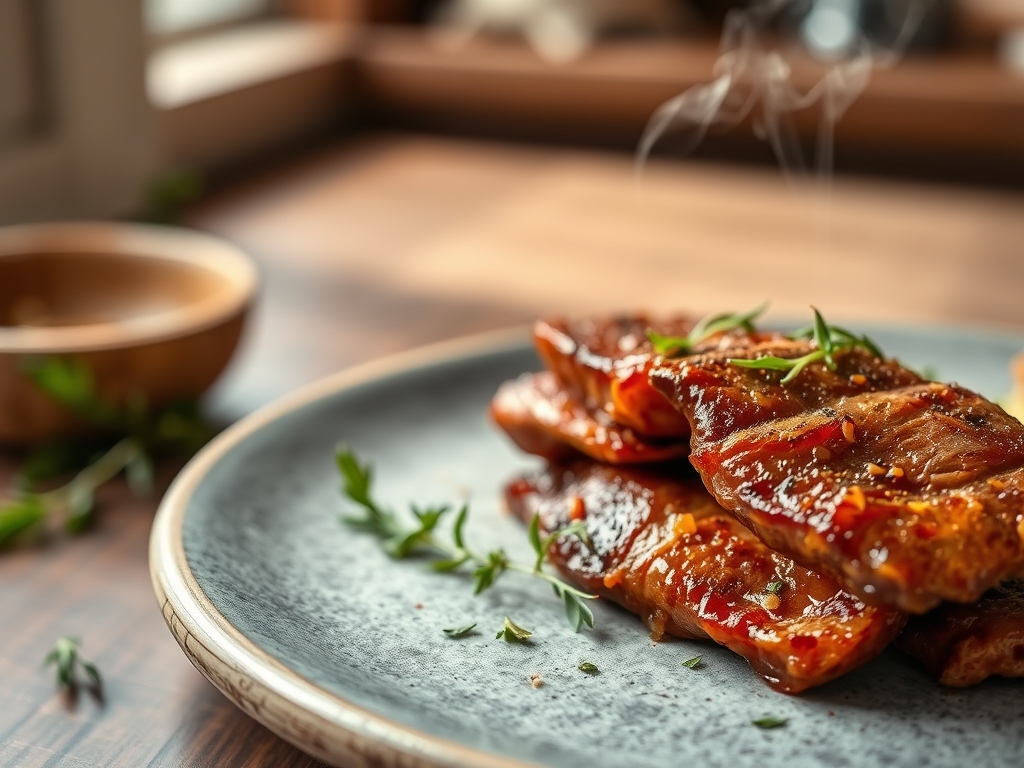
Picture this: a crust so dark and mahogany-rich it crackles under the knife; revealing a center that is pink, plush, and dripping with concentrated beef essence. This is not the result of a six-hour oven vigil. This is the magic of the countertop convection revolution. When you master air fryer roast beef recipes; you are essentially harnessing a high-velocity wind tunnel to achieve the ultimate Maillard reaction in record time. We are talking about a crust that rivals the finest steakhouses with a fraction of the effort. Forget the grey, overcooked edges of traditional roasting. The air fryer circulates heat so efficiently that it creates a pressurized environment for the fat to render perfectly while the interior remains buttery and tender. It is the smartest way to handle a Sunday dinner without the mental load of monitoring a giant oven. Whether you are aiming for a piquant pepper-crusted ribeye or a classic garlic-rubbed top round; the science of hot air is about to become your best friend in the kitchen.
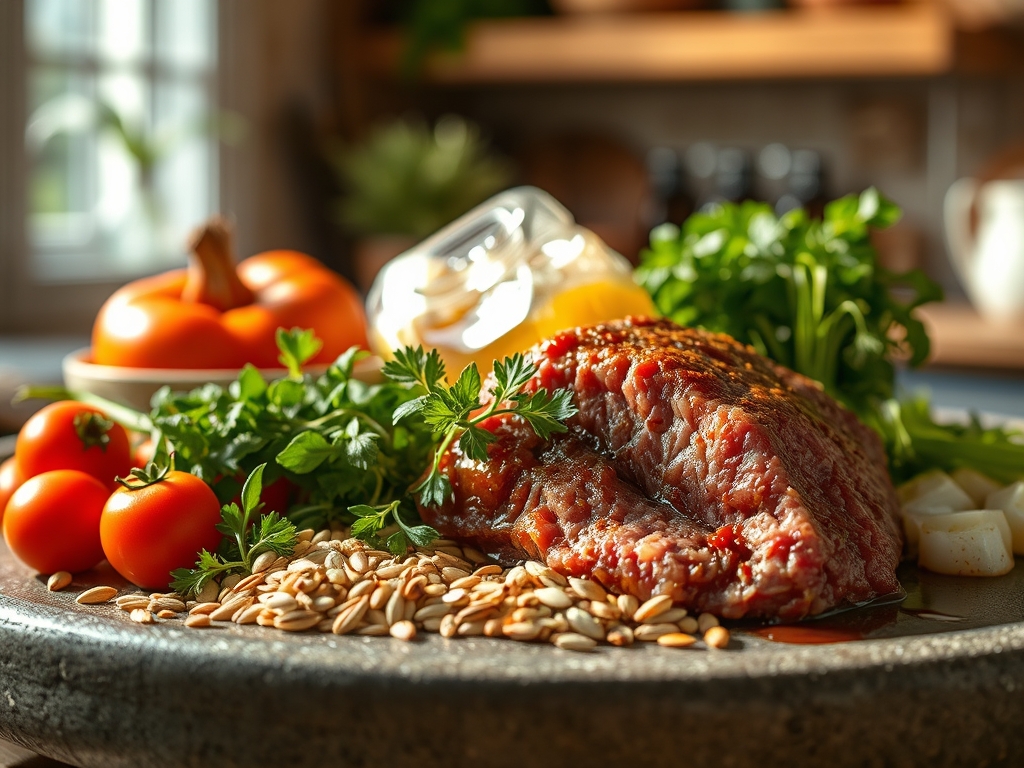
The Gathers:
To achieve a five-star result, your mise-en-place must be intentional. We start with the star: a two to three-pound roast. I prefer a Top Sirloin or a Tri-Tip for their lean muscle structure and excellent fat-to-meat ratio. You will need a high-smoke-point oil like avocado or grapeseed oil; avoid extra virgin olive oil here as it will smoke and turn bitter at high convection speeds. Grab your digital scale to ensure your salt ratio is exactly one percent of the meat's weight. This ensures deep seasoning without over-salting.
For the dry rub, gather smoked paprika, onion powder, and dried thyme. Use a microplane to zest fresh garlic into a paste; this allows the aromatic oils to infuse the meat more deeply than chopped garlic ever could. If you want a "Smart Substitution," swap the salt for a splash of Worcestershire sauce or liquid aminos to add a viscous, savory depth. If you are out of fresh herbs, a teaspoon of dried Herbes de Provence provides a floral, piquant lift that cuts through the richness of the rendered fat.
The Clock
The "Chef's Flow" is all about timing and temperature management. You cannot rush the physics of protein denaturation.
- The Tempering (20 minutes): Never put a cold roast in a hot air fryer. Let it sit on the counter to take the chill off. This ensures the center reaches the target temperature at the same time the exterior finishes browning.
- The Prep (10 minutes): Patting the meat dry is non-negotiable. Moisture is the enemy of the Maillard reaction.
- The Cook (25 to 45 minutes): This varies by weight. Plan on roughly 12 to 15 minutes per pound for medium-rare.
- The Rest (15 minutes): This is the most difficult part but the most vital. It allows the muscle fibers to relax and reabsorb the juices.
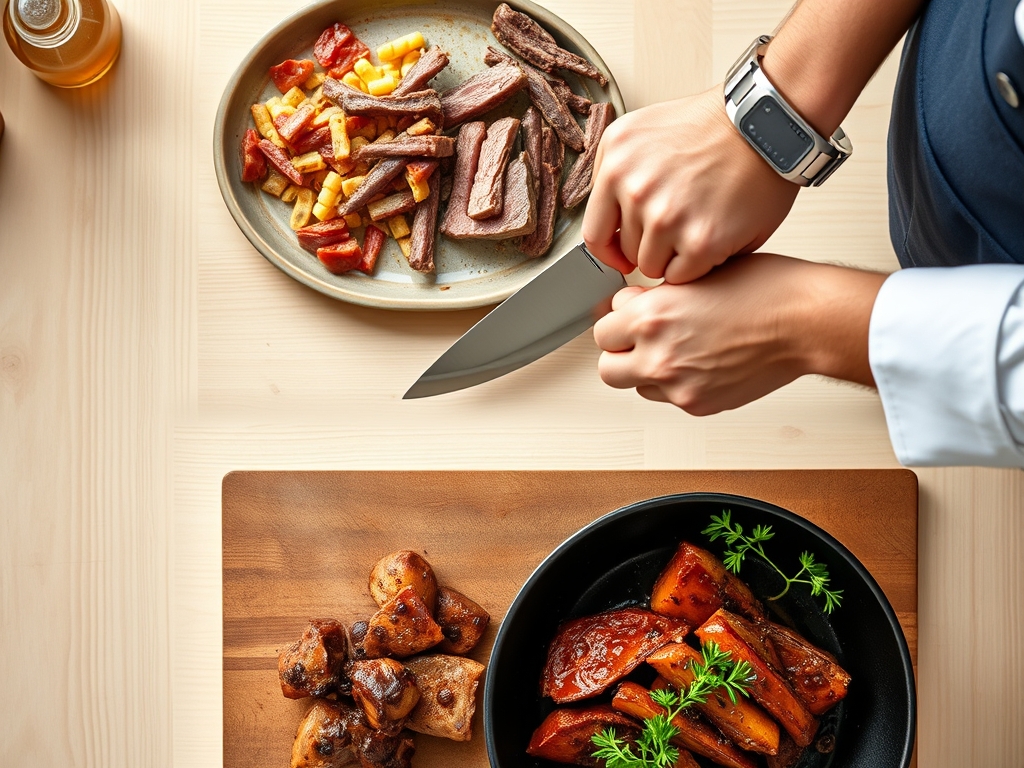
The Masterclass
1. The Desiccating Pat Down
Use heavy-duty paper towels to remove every trace of surface moisture from the beef. A dry surface allows the oil and spices to adhere better and prevents the meat from steaming. Use your bench scraper to clear away any excess moisture from your cutting board before seasoning.
Pro Tip: This facilitates the Maillard reaction. By removing water, the surface temperature rises quickly to 285 degrees Fahrenheit, which is the threshold where amino acids and sugars transform into those savory, brown flavor compounds.
2. The Oil Emulsion Rub
Slather the roast in your high-smoke-point oil. Massage the garlic paste and dry spices into every crevice. Use tongs to flip the meat, ensuring you do not miss the ends.
Pro Tip: Oil acts as a heat conductor in an air fryer. It fills the microscopic gaps on the meat's surface, creating a more uniform heat distribution and preventing the spices from burning before the meat is cooked.
3. The High-Heat Blast
Preheat your air fryer to 400 degrees Fahrenheit. Place the roast in the basket, fat-side up. Cook for the first 10 minutes at this high heat to "set" the crust.
Pro Tip: This initial blast triggers rapid enzymatic browning. It creates a structural "shell" that helps the roast retain its shape and prevents excessive juice loss during the remainder of the cooking process.
4. The Gentle Finish
Lower the temperature to 350 degrees Fahrenheit. This allows the internal temperature to rise slowly without carbonizing the exterior. Use a digital meat thermometer to check the center frequently.
Pro Tip: This prevents the "grey ring" effect. Slowing the heat transfer ensures a more even gradient of doneness from the edge to the center of the roast.
5. The Thermal Carryover Rest
Remove the roast when it is 5 degrees below your target temperature (e.g., pull at 130 for a 135-degree medium-rare). Place it on a warm plate and tent loosely with foil.
Pro Tip: This accounts for thermal carryover. The residual heat on the surface continues to move toward the center even after the meat is out of the heat source, ensuring the perfect final temperature.
The Deep Dive
Macro Nutrition: A standard 4-ounce serving of air fryer roast beef provides approximately 250 calories, 30 grams of high-quality protein, and 14 grams of fat. It is a powerhouse of Vitamin B12 and Zinc, making it a functional food for muscle recovery and immune support.
Dietary Swaps:
- Keto: This recipe is naturally keto-compliant. Serve with a side of butter-braised radishes.
- Vegan: Swap the beef for a large "roast" made of seasoned Seitan. Reduce cook time by half.
- Gluten-Free: Ensure your Worcestershire sauce or liquid aminos are certified GF.
The Fix-It:
- Tough Meat: You likely skipped the rest period or sliced with the grain. Always slice against the muscle fibers to shorten them for a tender bite.
- Burnt Spices: Your air fryer fan might be too close to the meat. Lower the roast or reduce the temperature by 25 degrees.
- Uneven Cooking: The roast was likely too cold when it started. Ensure a full 20-minute temper at room temperature next time.
Meal Prep: To reheat without losing quality, do not use the microwave. Use the air fryer at 300 degrees for 4 minutes. This refreshes the crust without overcooking the center. If you have leftovers, use a saucier to simmer the drippings with a bit of beef stock to create a quick au jus for dipping.
The Wrap-Up
Mastering air fryer roast beef recipes is like unlocking a culinary superpower. You have taken a traditionally intimidating "Sunday-only" meal and turned it into a streamlined, high-performance weeknight staple. By understanding the physics of heat transfer and the chemistry of the Maillard reaction, you are no longer just following a recipe; you are engineering flavor. Now, grab those tongs, trust your thermometer, and get ready to serve the most succulent roast of your life. Your kitchen is now a high-tech steakhouse, and you are the head chef.
The Kitchen Table
What is the best cut for air fryer roast beef?
Top sirloin, tri-tip, or eye of round are ideal. These cuts are uniform in shape, which allows the high-velocity air to circulate evenly, ensuring a consistent crust and a perfectly pink center every single time.
Do I need to flip the roast?
Yes, flipping halfway through is essential. Even with high-speed convection, the bottom of the roast can become soggy from resting on the basket. Flipping ensures the fat renders evenly and the crust develops on all sides.
How do I make the meat more tender?
The secret is the salt and the slice. Salt the meat at least 40 minutes before cooking to break down proteins. After roasting and resting, always slice against the grain to ensure the shortest possible muscle fibers.
Can I cook frozen roast beef in the air fryer?
It is not recommended for a large roast. The exterior will likely burn or dry out before the center reaches a safe temperature. For the best texture, always thaw the meat completely in the refrigerator before starting.