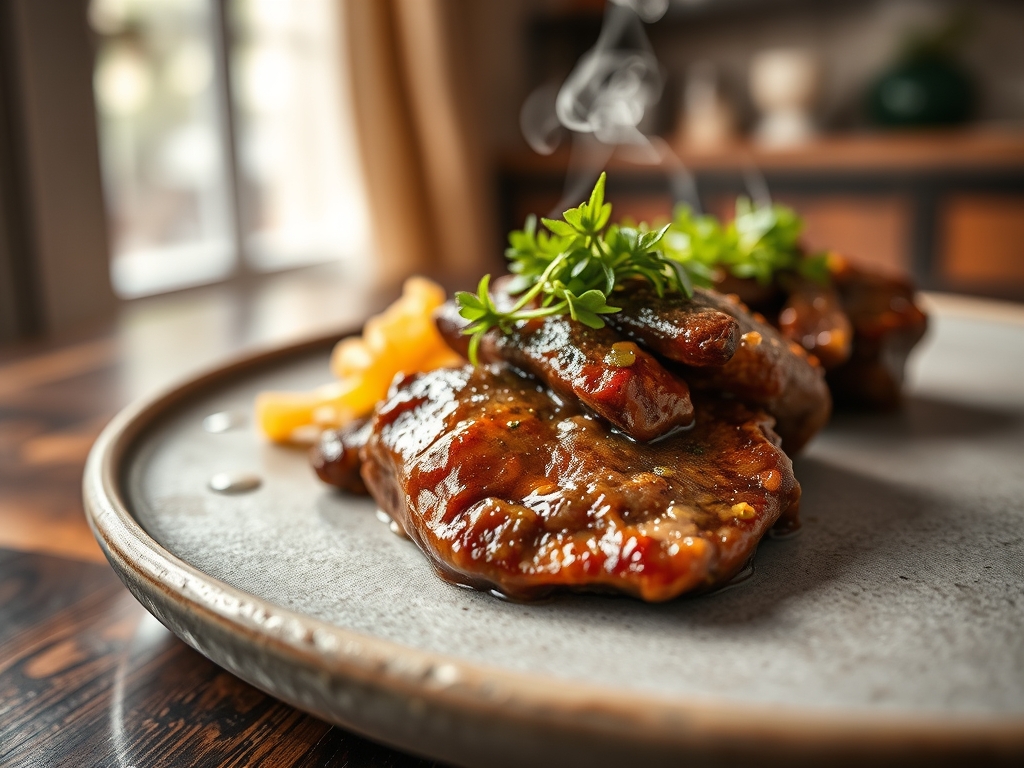
Imagine the scent of red wine reducing into a dark, viscous nectar while the heavy bottomed skillet hums with the sound of searing fat. Mastering french beef recipes is not just about following a list of instructions; it is about understanding the molecular transformation of humble cuts into velvet. This is where kitchen chemistry meets pure, unadulterated comfort.
The secret to these timeless classics lies in the patience of the braise and the precision of the sear. We are talking about deep, mahogany crusts achieved through the Maillard reaction and sauces so glossy they reflect your own excited face back at you. Whether you are craving the rustic charm of a Daube or the sophisticated silkiness of a Filet au Poivre, these techniques will turn your kitchen into a Parisian bistro. Grab your favorite apron and a glass of something bold; we are about to dive into the architecture of flavor.
The Gathers:
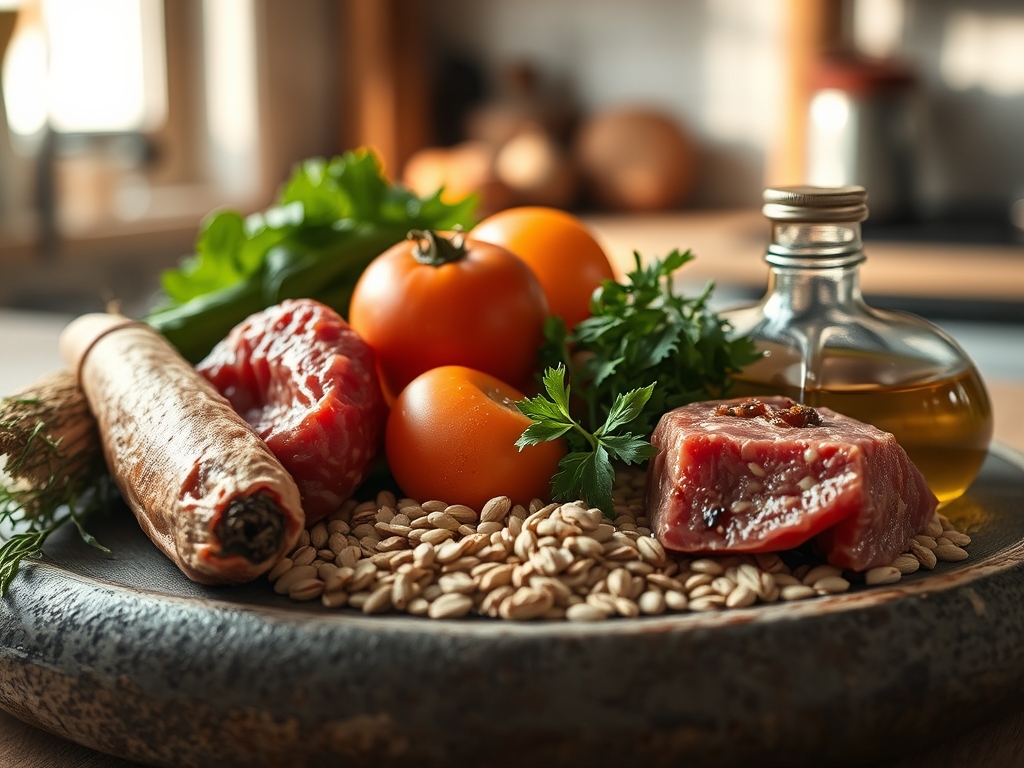
To execute these french beef recipes with professional finesse, your mise-en-place must be flawless. Start with your protein. For slow-cooked wonders like Boeuf Bourguignon, look for chuck or shin; these cuts are rich in collagen, which transforms into gelatin during the long simmer to create a luxurious mouthfeel. For quick-fire steaks, a well-marbled ribeye or lean tenderloin is essential.
Your aromatics should include the "holy trinity" of French cooking: carrots, celery, and onions. Use a sharp chef knife to ensure a uniform mirepoix, as consistent surface area leads to even caramelization. You will also need high-quality beef stock, unsalted butter for better sodium control, and a bouquet garni of fresh thyme, bay leaves, and parsley stems tied with kitchen twine.
Smart Substitutions:
If you find yourself without a bottle of Burgundy, a dry Pinot Noir or even a heavy Cabernet Sauvignon will suffice to provide the necessary acidity. For those avoiding alcohol, a mixture of beef stock and a tablespoon of balsamic vinegar mimics that piquant depth. If you are out of shallots, the white parts of green onions offer a similar delicate sharpness when finely minced with a microplane.
The Clock
Efficiency in the kitchen is all about the "Chef's Flow." For these recipes, expect a preparation time of roughly 45 minutes of active chopping and searing. The cooking time, however, varies wildly. A Steak Frites takes less than 15 minutes from pan to plate, while a traditional Pot-au-Feu requires a 4-hour investment to properly render connective tissues.
The flow begins with room-temperature meat. Never pull beef straight from the fridge and drop it into a hot pan; the thermal shock causes the muscle fibers to seize, resulting in a tough texture. Allow at least 30 minutes for the internal temperature to rise. While the meat tempers, prepare your vegetables and measure your liquids using a digital scale for absolute precision. This overlap ensures that once the heat is on, you are never scrambling.
The Masterclass
1. The Critical Sear
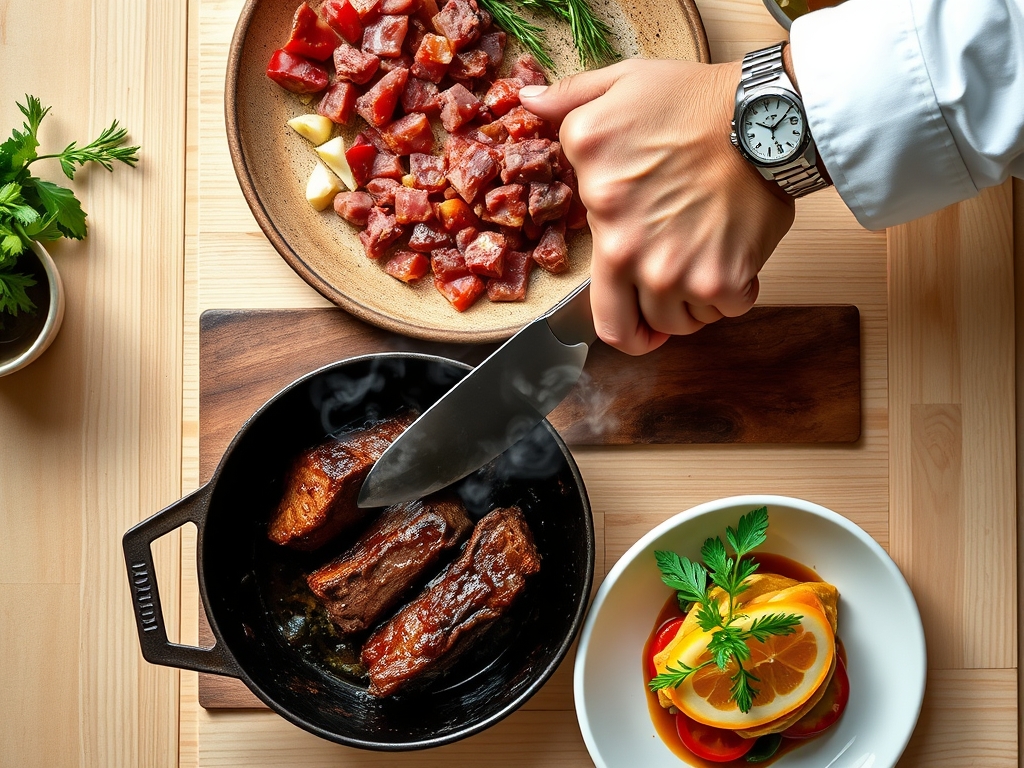
Pat your beef bone-dry with paper towels before seasoning liberally with kosher salt. Heat your heavy-bottomed skillet until the oil shimmers and just begins to smoke. Place the beef in the pan using tongs, ensuring you do not overcrowd the surface, which would lead to steaming rather than searing.
Pro Tip: This stage relies on the Maillard reaction, a chemical reaction between amino acids and reducing sugars. Achieving a deep brown crust creates hundreds of different flavor compounds that cannot be replicated by boiling or steaming.
2. Deglazing the Fond
Once the meat is browned and removed, you will see dark bits stuck to the bottom of the pan. This is "fond," and it is liquid gold. Pour in your wine or stock and use a wooden spoon or bench scraper to agitate those bits back into the liquid.
Pro Tip: Deglazing is a form of solvent extraction. The alcohol and water in your liquid dissolve the concentrated proteins and sugars, integrating that intense "roasted" profile directly into your sauce base.
3. The Low and Slow Braise
For stews, return the beef to the pot and submerge it halfway in liquid. Cover with a tight-fitting lid or a cartouche (a parchment paper lid) and place it in a low-temperature oven. The goal is a gentle simmer, never a rolling boil.
Pro Tip: Maintaining a temperature around 190 degrees Fahrenheit is crucial for collagen hydrolysis. This process breaks down tough connective tissue into gelatin, which provides the viscous, lip-smacking quality characteristic of great French stews.
4. Emulsifying the Sauce
Before serving, you must finish the sauce. Remove the meat and whisk in cold cubes of butter or a bit of heavy cream. Use a saucier for this step, as the rounded bottom allows your whisk to reach every corner, preventing scorching.
Pro Tip: This creates a fat-in-water emulsion. The proteins in the butter act as emulsifiers, binding the fats and liquids together to create a glossy, opaque sauce that coats the back of a spoon.
The Deep Dive
Macro Nutrition:
A standard serving of French beef stew provides approximately 35g of protein and 20g of fat. While nutrient-dense, the calorie count can be high due to the butter and wine. Balance this with a side of steamed haricots verts to add fiber and micronutrients.
Dietary Swaps:
- Vegan: Replace beef with thick-cut king oyster mushrooms or seitan. Use vegetable demi-glace and vegan butter to maintain the richness.
- Keto: Omit the flour-based roux. Thicken your sauce by reducing it further or adding a touch of xanthan gum. Serve over cauliflower mash instead of potatoes.
- GF: Use tamari instead of soy sauce (if used for umami) and swap all-purpose flour for a cornstarch slurry or almond flour to thicken.
The Fix-It:
- Too Salty: Do not add water, which dilutes flavor. Instead, drop in a peeled, halved potato for 15 minutes; it acts as a sponge for excess sodium.
- Thin Sauce: If your sauce is watery, create a beurre manie by mixing equal parts softened butter and flour, then whisking it into the simmering liquid.
- Tough Meat: If the beef is still chewy, it simply hasn't cooked long enough. Put the lid back on and give it another 30 minutes. Science cannot be rushed.
Meal Prep & Reheating:
French beef recipes actually taste better on day two because the aromatic compounds have more time to infuse and the flavors undergo further oxidation. To reheat, avoid the microwave, which turns beef into rubber. Instead, warm it gently on the stovetop over low heat, adding a splash of stock to loosen the gelatinized sauce.
The Wrap-Up
You are now armed with the technical prowess to conquer the world of french beef recipes. From the initial sear to the final emulsified swirl of butter, you understand the "why" behind every "how." Cooking is the ultimate art form because you get to eat your masterpiece at the end. So, go forth, deglaze with confidence, and let the aroma of a slow-simmered braise fill your home. Your dinner guests won't know what hit them, but their taste buds certainly will.
The Kitchen Table
Which cut of beef is best for French stew?
Chuck roast or beef shin are ideal. These cuts contain high amounts of collagen, which breaks down into gelatin during slow cooking, resulting in tender meat and a rich, velvety sauce that leaner cuts cannot provide.
Why is my red wine sauce bitter?
Bitterness usually occurs if the wine hasn't reduced enough to cook off the harsh alcohols or if the heat was too high, scorching the sugars. Balance the acidity with a small pinch of sugar or a knob of cold butter.
Can I make Boeuf Bourguignon in a slow cooker?
Yes, but you must sear the meat and aromatics in a skillet first. The slow cooker cannot reach temperatures high enough for the Maillard reaction, so skipping the sear results in a gray, flavorless dish.
How do I get a thick sauce without flour?
Reduce the cooking liquid by half over high heat to concentrate the natural gelatins. Alternatively, blend a portion of the cooked vegetables back into the sauce to provide body and thickness without adding gluten or starch.